
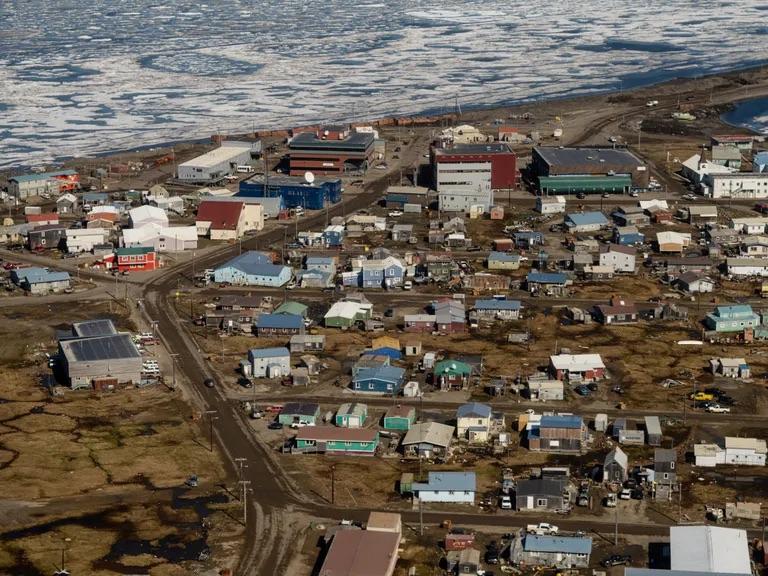
Residents of Utqiagvik witnessed one of Earth’s most extraordinary natural phenomena today as the sun finally rose above the horizon at 2:57 AM local time after disappearing for nearly 65 consecutive days.
But even more astonishing is what comes next: the sun is now expected to remain visible for the next 84 straight days, meaning the northern Alaskan town will not experience another sunset until around August 2.
The event marks the beginning of the Arctic “Midnight Sun” season, a phenomenon experienced in regions located far above the Arctic Circle. During this period, the Earth’s tilt causes the North Pole to remain angled toward the sun, allowing daylight to persist around the clock.
Utqiagvik, formerly known as Barrow, is the northernmost town in the United States and sits roughly 500 miles north of the Arctic Circle. The remote community is home to about 4,000 residents, many of whom are Indigenous Iñupiat people who have adapted to the region’s extreme seasonal shifts for generations.
For the past two months, the town has endured what is known as “Polar Night,” a period during which the sun never rises above the horizon. While the community still experiences limited twilight during parts of the day, direct sunlight disappears entirely. This year’s darkness lasted approximately 65 days, one of the longest stretches of winter darkness experienced anywhere in the United States.
Now, the opposite extreme has arrived.
From today onward, the sun will continuously circle above the horizon without fully setting, creating endless daylight conditions that can feel surreal to outsiders. Midnight can resemble late afternoon, and residents often find themselves adjusting sleeping schedules as their bodies struggle to adapt to the constant brightness.
The phenomenon is caused by Earth’s 23.5-degree axial tilt. During the Northern Hemisphere summer, Arctic regions lean toward the sun, resulting in prolonged daylight. In winter, the reverse occurs, plunging the same areas into extended darkness.
Despite the endless sunshine, temperatures in Utqiagvik remain relatively cold compared to most parts of the world. Even during summer, the town rarely experiences significant heat because the sun remains low on the horizon rather than directly overhead. Experts note that the angle of sunlight in Utqiagvik during midsummer is similar to winter sunlight in many southern cities.
#BREAKING🚨: Today in Utqiagvik, the sun rose above the horizon at 2:57 AM after 65 days and won’t set again for 84 straight days or until August 2nd! pic.twitter.com/0GkRLo3TzG
— All day Astronomy (@forallcurious) May 11, 2026
The dramatic seasonal cycles have long fascinated scientists, photographers, travelers, and weather enthusiasts. Social media users frequently describe the phenomenon as “unreal,” with videos showing bright sunlight shining over homes and Arctic landscapes well past midnight.
For locals, however, the endless daylight is simply part of life in one of the planet’s most extreme inhabited environments. Residents often use blackout curtains and carefully managed routines to cope with disrupted sleep cycles caused by the perpetual sunshine.
The return of the sun is also culturally significant for many Arctic communities. After weeks of darkness and harsh winter conditions, the first sunrise is often viewed as a symbol of renewal, survival, and the beginning of a more active season.
And while the current season brings nearly three months of uninterrupted daylight, the cycle will eventually reverse once again later this year, when Utqiagvik returns to weeks of near-total darkness as winter reclaims the Arctic.