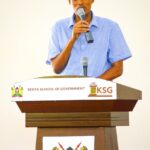

Nairobi Senator Edwin Sifuna has ignited a major governance debate after alleging that KSh 1.9 billion was withdrawn from the Nairobi County salary account without any supporting documentation. The claim, if proven, would point to one of the most serious financial irregularities in the county’s recent history, raising urgent questions about oversight, transparency, and accountability.
The Nairobi County salary account is not just any financial channel—it is a critical lifeline used to pay thousands of county employees, including healthcare workers, emergency responders, and administrative staff. Any unexplained withdrawal from such an account directly affects service delivery and public trust. Sifuna’s allegations suggest that standard financial procedures, including documentation, approvals, and audit trails, may have been bypassed.
This comes at a time when Nairobi County, under Governor Johnson Sakaja, is already facing heightened scrutiny from oversight institutions, particularly the Senate.
Recent developments show that Sakaja has been embroiled in a standoff with the Senate’s County Public Accounts Committee (CPAC), which has been demanding answers over multiple audit queries. These include concerns over financial management, hiring practices, and expenditure irregularities within the county.
The situation escalated when the Senate issued an arrest order against Sakaja for contempt of Parliament after he failed to appear before the committee despite repeated summons. Lawmakers also imposed a KSh 500,000 fine, signaling the seriousness of the accountability concerns.
In a dramatic turn of events, police were reportedly deployed to locate the governor following the directive, highlighting the intensity of the standoff between county leadership and national oversight bodies.
Sakaja later appeared before the Senate to defend himself, insisting that his absence was due to a broader institutional disagreement between the Council of Governors and the Senate, rather than an attempt to evade accountability. He has maintained that he has consistently engaged with oversight committees and responded to audit queries, some dating back several years.
However, the allegations raised by Sifuna add a new layer of complexity to the situation. While the Senate queries focus on broader financial management issues, the claim of a KSh 1.9 billion undocumented withdrawal directly touches on possible gaps in internal financial controls within the county.
Financial experts note that such a transaction would normally require multiple layers of approval, including documentation from treasury officials, authorization from accounting officers, and clear audit records. The absence of these raises concerns about potential systemic weaknesses—or worse, deliberate circumvention of established procedures.
The issue also reflects a broader pattern of governance challenges that have historically affected Nairobi County. Previous administrations have faced serious legal and corruption-related cases. For instance, former governor Mike Sonko was arrested and later impeached over corruption allegations, including cases involving misuse of public funds and conflict of interest.
Such precedents have heightened public sensitivity to financial management issues within the county, making any new allegations particularly significant.
Ksh1.9 billion was withdrawn from the Nairobi County salary account without any supporting documents – Sifuna pic.twitter.com/xEygCxJoIt
— Kenyans.co.ke (@Kenyans) March 31, 2026
Beyond legal implications, the political dimension of the current situation cannot be ignored. Sifuna, a key figure within the opposition, has positioned himself as a vocal critic of governance lapses in Nairobi. His allegations are likely to intensify political pressure on Sakaja, especially if investigations are launched or if more details emerge.
The controversy also raises questions about internal county systems. How did such a large amount allegedly move without documentation? Were internal audit mechanisms bypassed, or is this a case of delayed reconciliation of accounts? These are questions that only a thorough forensic audit can answer.
For Nairobi residents, the concern is more immediate. The county government is responsible for essential services such as healthcare, garbage collection, infrastructure, and public transport systems. Any financial instability or mismanagement directly impacts these services.
The ongoing standoff between the Senate and the governor further complicates matters. While oversight is a constitutional requirement, prolonged institutional conflicts can slow down decision-making and service delivery.
At the same time, Sakaja has defended his administration, arguing that Nairobi often faces disproportionate scrutiny compared to other counties and insisting that he is committed to accountability and transparency.
Still, the combination of Senate pressure, arrest threats, audit queries, and now Sifuna’s allegations paints a picture of a county government under intense examination.
Ultimately, the claim of a KSh 1.9 billion undocumented withdrawal is not just a political statement—it is a serious governance issue that demands clarity. If substantiated, it could point to major financial mismanagement. If disproven, it underscores the need for transparent communication to restore public confidence.
As the situation unfolds, the spotlight will remain firmly on Nairobi County’s financial systems, its leadership, and the institutions tasked with ensuring accountability. The coming days may determine whether this is a political storm—or the beginning of a deeper investigation into the management of public funds in Kenya’s capital.