
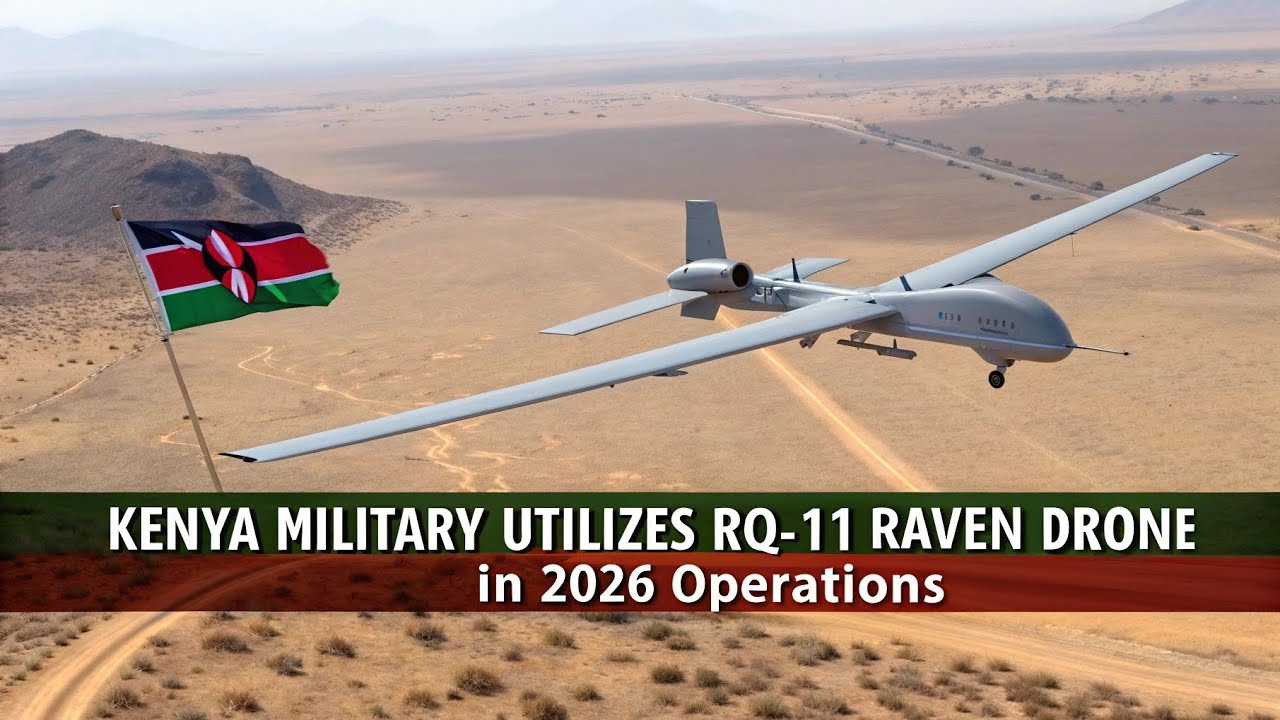
Kenya’s military capabilities have significantly evolved over the years, with the adoption of advanced unmanned aerial vehicles (UAVs) drones, commonly known as drones, playing a central role in modern warfare. These systems have enhanced surveillance, intelligence gathering, and precision targeting—especially in operations against militant groups such as Al-Shabaab.
The Kenya Defence Forces (KDF) have increasingly integrated drones technology into their operations, marking a shift toward more efficient, intelligence-driven military strategies. From reconnaissance missions to directing artillery strikes, drones have become a critical asset in both domestic and regional security efforts.
The Role of Drones in Kenya’s Military Strategy
Drones have revolutionized how the KDF conducts operations, particularly in hostile and hard-to-reach environments. These UAVs provide real-time intelligence, allowing commanders to monitor enemy movements, assess threats, and make informed decisions before engaging in combat.
One of the most significant advantages of drones is their ability to support precision strikes. By identifying targets in advance, UAVs reduce the risk of collateral damage and increase the effectiveness of military engagements. This is especially important in counterterrorism operations where accuracy is critical.
Kenya has effectively used drones to direct artillery strikes before deploying armed helicopters, ensuring that operations are both strategic and efficient. This combination of surveillance and coordinated attack capability has strengthened the country’s response to security threats.
Key Drone Systems Used by Kenya

Kenya has acquired several advanced drone systems over the years, mainly through partnerships with international allies such as the United States and Turkey.
One of the most notable systems is the ScanEagle UAV, which Kenya procured under a $9.8 million Foreign Military Sale agreement. Manufactured by Insitu, a subsidiary of Boeing, the ScanEagle has been widely used in global conflict zones including Iraq and Afghanistan.
The ScanEagle is primarily used for surveillance and reconnaissance. Equipped with infrared cameras, it can capture both still and moving images, transmitting real-time data to control centers. This enables Kenyan forces to track militant activity, monitor terrain, and plan operations with greater accuracy.
Another important system is the AeroVironment RQ-11 Raven, a smaller, hand-launched drone that is particularly useful for short-range reconnaissance missions. Kenya received several of these units as part of U.S. support in counterterrorism efforts.
In addition, Kenya has recently incorporated the Bayraktar TB2, a Turkish-made drone known for its effectiveness in modern warfare. This drone is capable of both surveillance and armed operations, making it a versatile addition to Kenya’s military arsenal.
Other UAV systems associated with Kenya include:
- Ghost Ray UAV
- ANKA-A MALE UAV (developed in partnership with Turkey)
- Class II VTOL drones
These systems collectively enhance Kenya’s ability to conduct both tactical and strategic operations.
International Support and Partnerships
Kenya’s drone capabilities have been significantly strengthened through international cooperation. The United States has played a key role by providing equipment, training, and technical support.
For instance, the delivery of ScanEagle drones and Raven systems has helped boost Kenya’s surveillance capabilities in the fight against Al-Shabaab. These partnerships are part of broader efforts to enhance security in the Horn of Africa.
There have also been discussions involving the United States Africa Command (AFRICOM) regarding the potential deployment of armed drones in Kenya. While such arrangements require government approval, they highlight the strategic importance of Kenya in regional security operations.
Additionally, Kenya has collaborated with Turkey to develop local drone technology, including efforts to transfer knowledge and build domestic capacity in UAV production.
Impact on Counterterrorism Operations
The use of drones has had a significant impact on Kenya’s fight against terrorism. UAVs allow for continuous monitoring of militant activities, making it easier to detect threats before they materialize.
Security experts note that real-time data collection enables faster response times and more coordinated operations. By tracking communication, movement, and training activities of militant groups, drones help disrupt planned attacks and weaken terrorist networks.
This has been particularly important in Somalia, where Kenyan troops operate under the African Union mission. The ability to gather intelligence remotely reduces risks to personnel while increasing operational effectiveness.
Advantages of Drone Technology
The adoption of UAVs offers several key advantages:
- Real-time intelligence gathering
- Reduced risk to soldiers
- Improved accuracy in targeting
- Enhanced surveillance in remote areas
These benefits make drones an essential component of modern military operations, allowing Kenya to operate more efficiently in complex security environments.
Challenges and Considerations
Despite their advantages, the use of drones also raises important questions. Issues such as transparency, accountability, and oversight are critical, especially since military procurement and operations are often classified.
There are also concerns about the ethical implications of drone warfare, particularly in relation to civilian safety and the rules of engagement. Ensuring that drone use complies with both national and international law is essential.
Additionally, maintaining and upgrading drone systems requires significant investment, technical expertise, and continuous training.
Kenya’s Position in Global Drone Warfare
Kenya’s adoption of advanced UAV systems places it among a growing number of countries leveraging drone technology for security purposes. Alongside nations such as the United States, Britain, and Japan, Kenya is part of a global shift toward smarter, technology-driven military strategies.
Within Africa, Kenya stands out as one of the few countries with access to systems like the ScanEagle, highlighting its strategic importance in regional security.
Conclusion
The integration of drones into Kenya’s military operations marks a new era in national defense. By enhancing surveillance, improving precision, and enabling faster response times, UAVs have become indispensable tools in the fight against terrorism and organized threats.
As technology continues to evolve, Kenya’s investment in drone capabilities is likely to grow, further strengthening its position as a key player in regional and international security. However, balancing technological advancement with accountability and ethical considerations will remain crucial in shaping the future of drone warfare in the country.