
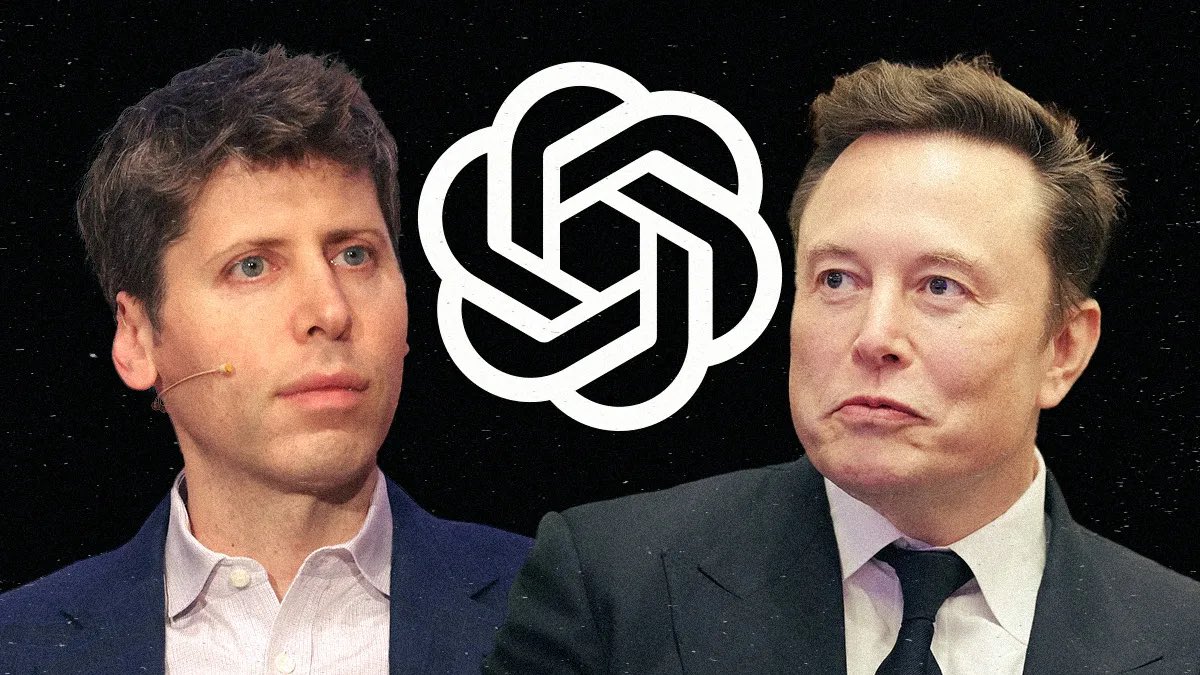
Sam Altman is navigating one of the most turbulent moments of his career, as a convergence of legal disputes, investigative reporting, public backlash, and even a physical attack has placed him—and OpenAI—under intense global scrutiny.
What began as fragmented discussions across social media has rapidly evolved into a multi-layered crisis that touches on personal allegations, corporate governance, and the broader societal tensions surrounding artificial intelligence.
The most alarming development came when Altman’s residence was targeted in a Molotov cocktail attack, marking a rare and serious escalation from online criticism to real-world violence.
The incident, which occurred in the early hours, involved an individual allegedly attempting to set fire to property associated with the OpenAI CEO.
While no injuries were reported, the event sent shockwaves across the tech industry and raised urgent questions about the safety of high-profile figures at the center of controversial technological advancements.
Authorities later confirmed that a suspect had been apprehended, with additional reports suggesting the individual had also made threats related to OpenAI offices.
The attack did not occur in isolation. It unfolded against a backdrop of mounting criticism toward artificial intelligence companies, with growing concerns globally about job displacement, ethical risks, and the concentration of power in a handful of tech organizations.
In this context, Altman has increasingly become a symbolic figure—both celebrated as a pioneer and criticised as a central actor in shaping a technology many believe is advancing faster than regulation or public understanding.
Simultaneously, Altman is facing renewed legal challenges after a sexual abuse lawsuit filed by his sister was allowed to proceed under Missouri law.
The case had previously been dismissed on procedural grounds related to timing, but its reinstatement has reignited public attention.
While the allegations remain unproven, their return has intensified scrutiny of Altman’s personal life, particularly as they circulate widely across digital platforms.
The intersection of personal allegations and corporate leadership has further complicated the narrative, making it difficult to separate individual accountability from institutional responsibility.
Adding another layer of pressure is a major investigative report led by Ronan Farrow, which examines internal dynamics within OpenAI and raises broader questions about governance, transparency, and decision-making at the organization.
The investigation draws from extensive reporting and sources, contributing to a growing body of scrutiny around how one of the world’s most influential AI companies is managed.
For Altman, this represents not just reputational pressure but also renewed examination of leadership practices that have previously come under question.
Those concerns are not new. In 2023, Altman was briefly removed as CEO of OpenAI before being reinstated after a dramatic internal standoff involving employees and investors.
That episode exposed deep divisions within the organisation, particularly around the balance between rapid commercialisation and long-term safety considerations.
The current wave of scrutiny appears to be reviving many of those unresolved tensions, but in a far more public and amplified environment.
Compounding these issues is an ongoing legal battle involving Elon Musk, a co-founder of OpenAI who has since become one of its most vocal critics. Musk has expanded his lawsuit against the company, seeking structural changes that go beyond financial compensation.
Notably, he has called for Altman and Greg Brockman to be removed from their leadership roles, signalling a fundamental challenge to the current direction of OpenAI.
The dispute reflects deeper disagreements about the organisation’s evolution from a nonprofit mission into a hybrid model with strong commercial interests.
Meanwhile, social media—particularly X—has played a central role in shaping and accelerating the narrative. Posts, clips, and commentary have transformed complex developments into viral conversations, blending serious analysis with satire and speculation.
In some instances, users have even used AI-generated content to comment on Altman himself, creating a feedback loop in which the technology he helped popularise is now influencing public perception of his leadership.
This dynamic has reinforced the idea that in the digital age, narratives are no longer controlled by traditional media alone.
The convergence of these events highlights a broader shift in how technology leaders are perceived. Altman is no longer just a CEO operating within the confines of Silicon Valley—he is a global figure at the center of debates about power, accountability, and the future of human-machine interaction.
His decisions, and those of OpenAI, now carry implications that extend far beyond the company itself, influencing industries, governments, and everyday life.
At the same time, the situation underscores the growing risks associated with leadership in high-impact technological fields. As artificial intelligence becomes more integrated into society, the individuals driving its development are increasingly exposed—not only to scrutiny and criticism but also to personal risk.
The attack on Altman’s home serves as a stark reminder of how quickly tensions can escalate when technological change intersects with public fear and uncertainty.
For OpenAI, the stakes are equally high. The company sits at the forefront of a rapidly evolving industry, and its credibility depends heavily on trust—both in its technology and its leadership. The combination of legal challenges, internal scrutiny, and external pressure presents a complex test of resilience and governance.
What happens next will likely depend on several key developments: the progression of the refiled lawsuit, the outcome of ongoing legal disputes, the impact of investigative reporting, and the company’s ability to navigate growing public concern about AI.
Each of these factors has the potential to shape not only Altman’s future but also the trajectory of OpenAI and the broader artificial intelligence ecosystem.
Ultimately, the situation surrounding Sam Altman reflects a defining moment in the intersection of technology, society, and accountability.
It is a story not just about one individual, but about the pressures facing those who lead transformative innovation in an era where progress is both celebrated and contested.