
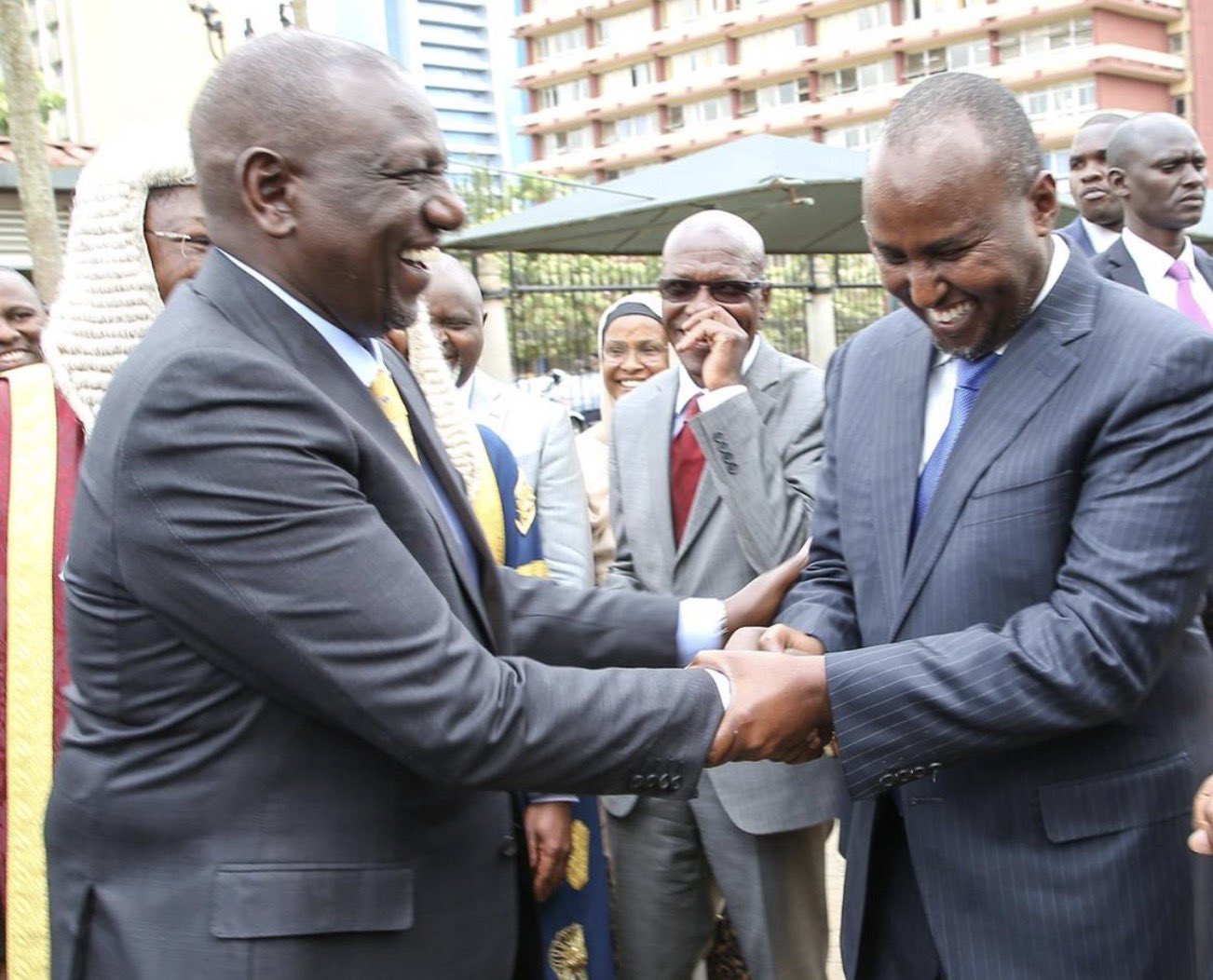
Kenya’s fragile “broad-based government” is now facing one of its most serious tests yet, as the Orange Democratic Movement (ODM) threatens to exit its working arrangement with United Democratic Alliance (UDA), the party of President William Ruto.
What was once presented as a stabilizing political compromise after months of tension now appears to be unraveling under the weight of mistrust, unmet agreements, and strategic rivalry ahead of the 2027 elections.
At the center of the dispute are allegations by ODM that UDA is actively using state machinery to poach its elected leaders, particularly from the Coast and Western regions—areas traditionally considered ODM strongholds.
Party insiders claim that Members of Parliament and local leaders are being pressured, enticed, or politically cornered into defecting to UDA, a move ODM views as both hostile and a violation of the spirit of their cooperation.
This growing tension has exposed deeper cracks in the coalition, especially around the implementation of a 10-point Memorandum of Understanding (MOU) that formed the basis of their collaboration.
ODM leaders argue that key elements of this agreement have either been ignored or selectively applied, raising questions about whether the partnership was ever meant to be equitable.
One of the most contentious issues is electoral zoning, a political strategy where coalition partners agree not to compete against each other in certain regions, allowing each party to dominate its perceived strongholds.
ODM Party at cross-roads: The Defining moment post-Raila Odinga
ODM has been pushing for such an arrangement to protect its influence in regions where it has historically enjoyed strong support. However, UDA has reportedly resisted this proposal, signaling its intention to compete nationally—even in ODM-dominated areas.
For ODM, this refusal is seen as a direct threat to its political survival. Without zoning, the party risks losing ground not just to opposition forces but to its own coalition partner, effectively weakening its bargaining power ahead of the next general election.
President William Ruto, however, has publicly downplayed the tensions. Speaking at a rally on April 13, he dismissed the threats of a fallout, emphasizing the importance of unity and national cohesion. His remarks suggested that political disagreements should not be allowed to derail what he portrays as a government working in the best interest of all Kenyans.
Despite this public reassurance, signals from ODM suggest a different reality. The party’s Central Management Committee is reportedly reviewing the terms of the agreement, assessing whether the partnership still serves its interests.
At the same time, National Assembly Minority Leader Junet Mohamed has hinted that ODM could withdraw from the arrangement if the current trajectory continues.
The situation has also spilled over into public discourse, particularly on social media platforms like X (formerly Twitter), where political commentators, supporters, and critics alike are weighing in.
Some argue that ODM is facing the consequences of aligning too closely with UDA, while others see the current tensions as proof that the coalition was always bound to be unstable.
Critics of the government have pointed to a pattern where political alliances are formed out of necessity rather than shared ideology, making them inherently fragile. The current dispute, they argue, reflects deeper structural issues within Kenya’s political system, where competition often outweighs cooperation.
Beyond the immediate political drama, the potential collapse of the ODM–UDA arrangement carries broader implications for governance and stability. The “broad-based government” was initially framed as a way to ease political tensions following protests and a high-profile impeachment saga. If the coalition breaks down, it could reopen political divisions and complicate legislative processes in Parliament.
Dear ODM…
— Sen. Ledama Olekina (@ledamalekina) April 13, 2026
There is also the looming shadow of the 2027 general election, which is already shaping political calculations. Both ODM and UDA appear to be positioning themselves strategically, not just as partners, but as competitors preparing for the next electoral cycle. In that context, the current conflict may be less about the present and more about securing future dominance.
Ultimately, the unfolding situation highlights a familiar reality in Kenyan politics—alliances are often temporary, shaped by shifting interests rather than permanent loyalty.
As ODM weighs its options and UDA continues to assert its national ambitions, the coming days will be critical in determining whether the coalition can be salvaged or whether it will collapse entirely.
For now, the message from ODM is clear: unless concerns over poaching, zoning, and the implementation of agreed terms are addressed, the partnership may not survive. And if it does collapse, it could mark a significant turning point in Kenya’s political landscape heading into 2027.