
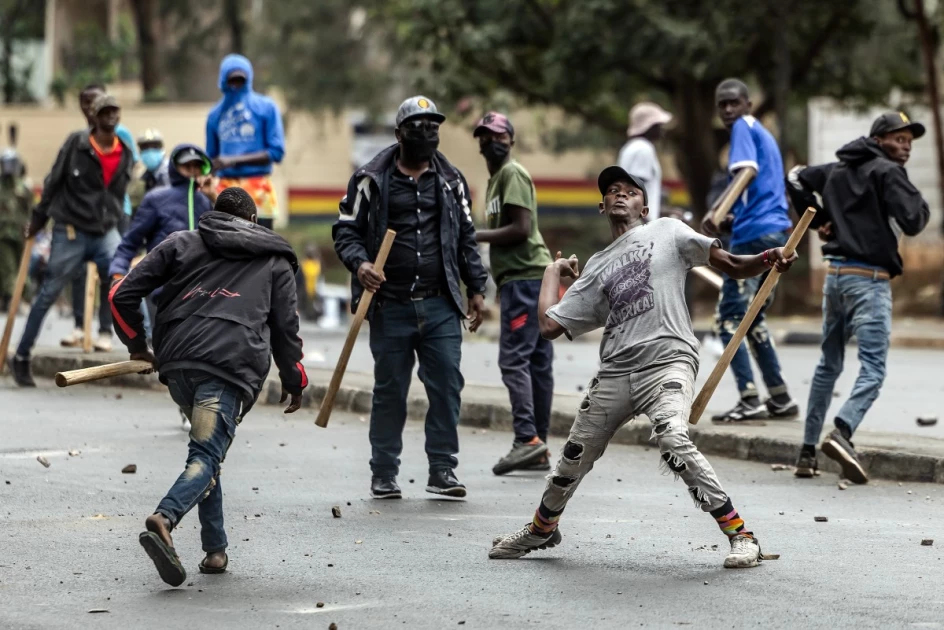
Planned anti-government demonstrations across parts of Kenya on Tuesday largely failed to gather the momentum their organizers had projected, revealing what appears to be a widening gap between political mobilization efforts and the public mood.
In several urban centers, including Nairobi, business activity continued with minimal disruption. While isolated groups of demonstrators were reported in a few locations, the widespread turnout anticipated by organizers did not materialize.
A Shift in Public Sentiment
The subdued response underscores a broader trend: many Kenyans, facing persistent economic pressures, appear increasingly reluctant to participate in protests that risk interrupting daily livelihoods.
Interviews with residents and traders in the capital suggest a preference for stability over confrontation. For small business owners and informal workers, even a single day of disruption can translate into lost income—an outcome many are no longer willing to risk.
This shift may indicate a recalibration of priorities among citizens, with economic survival and predictability outweighing calls for mass action.
Questions Around Mobilization Strategy
Tuesday’s developments also raise questions about the effectiveness of the networks behind the demonstrations, including activists aligned with the “Linda Mwananchi” movement.
Once able to galvanize large numbers, these groups now appear to be grappling with diminishing returns. Analysts point to several contributing factors, including protest fatigue, fragmented messaging, and the absence of clearly defined policy alternatives.
Critics argue that repeated calls for demonstrations, without tangible outcomes, may have eroded public confidence. Supporters, however, maintain that protest remains a legitimate tool for civic expression in a democratic society.
Leadership Under Scrutiny
The limited turnout has also renewed scrutiny of political figures associated with the protest calls. Among them is Siaya Governor James Orengo, a veteran politician known for his long-standing role in Kenya’s opposition politics.
While Orengo and others have been vocal on national issues, critics question whether their political influence has translated into measurable development outcomes at the local level. Such concerns are not unique to one individual but reflect a broader debate about accountability and performance in public office.
Government Emphasis on Stability
For the government, the relatively calm day may reinforce its message of maintaining order and continuity. Officials have consistently framed stability as essential to economic recovery and national cohesion.
At the same time, rights groups caution that low turnout should not be interpreted as a lack of grievances among the population. Issues such as the cost of living, taxation, and service delivery remain central to public discourse.
A Potential Turning Point
The events of Tuesday may signal an inflection point in Kenya’s political landscape. Mass demonstrations have historically played a significant role in shaping the country’s democratic trajectory. However, their effectiveness appears increasingly contingent on clear objectives, credible leadership, and alignment with public priorities.
Whether this moment represents a temporary lull or a more lasting shift remains to be seen.
The Road Ahead
For both organizers and the government, the challenge moving forward will be to engage a public that is both economically strained and politically attentive.
For protest leaders, this may require refining their strategies, articulating concrete policy alternatives, and rebuilding trust. For the government, it underscores the need to address underlying concerns that continue to drive calls for accountability.
As Kenya navigates these dynamics, one reality stands out: public participation—whether through protest or silence—remains a powerful barometer of the nation’s political pulse.