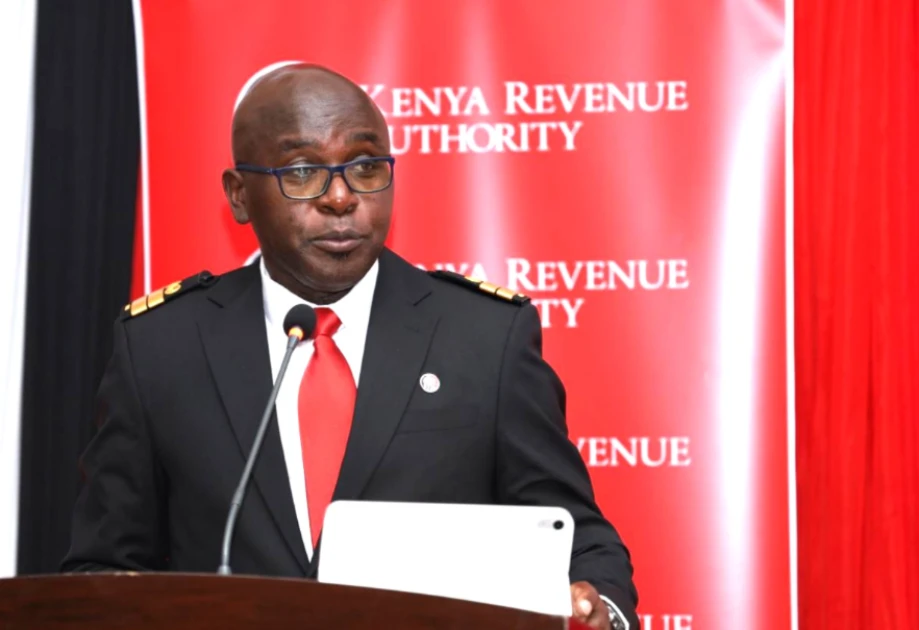
The abrupt exit of Humphrey Wattanga from the Kenya Revenue Authority marks one of the most consequential leadership shake-ups in Kenya’s recent fiscal history.
What was publicly framed as a transition to terminal leave has, in reality, exposed deep fractures within the country’s tax administration—ranging from failed technological reforms to mounting pressure from the Treasury over missed revenue targets.
According to insider accounts, Wattanga was asked to resign on the morning of April 8, 2026, but declined. By early afternoon, the KRA Board, chaired by Ndiritu Muriithi, moved decisively to end his tenure. The official communication was carefully worded, avoiding direct reference to dismissal, but the speed and timing of events suggested a forced exit rather than a routine transition.
A Technocrat Brought in to Fix a Broken System
When President William Ruto appointed Wattanga in August 2023, the expectations were clear. Coming from the private sector—specifically Meghraj Capital—he was seen as a technocrat capable of modernising Kenya’s tax collection systems and sealing long-standing revenue leakages.
His academic and professional credentials were impressive: Alliance High School, a degree from Harvard University, and an MBA from the Wharton School. He entered Times Tower with a strong mandate—to digitise tax administration and significantly boost revenue collection.
Wattanga’s strategy revolved heavily around technology. Under his leadership, KRA rolled out several digital initiatives, including the Electronic Tax Invoice Management System (eTIMS), USSD tax services, and even a WhatsApp-based chatbot designed to simplify filing for taxpayers. These efforts were intended to widen the tax base and reduce fraud.
However, while the ambition was evident, the results failed to match expectations.
Technology Investments That Failed to Deliver
One of the central issues that ultimately led to Wattanga’s downfall was the gap between investment and outcomes. Billions of shillings were poured into modernising KRA’s systems, but repeated failures undermined confidence in the reforms.
The most damaging incident occurred in November 2024, when the Integrated Customs Management System (iCMS) collapsed. The outage disrupted operations at the Port of Mombasa, Jomo Kenyatta International Airport, and inland depots, effectively paralysing cargo clearance across the country.
The economic consequences were immediate. Imports stalled, exports—particularly tea—were delayed, and the government lost critical revenue during the downtime.
This was not an isolated incident. In September 2025, the iTax system experienced a nationwide outage. Just weeks later, another failure linked to eCitizen locked businesses out of invoicing and payment systems for over 30 hours.
These recurring failures painted a picture of a system that was not only outdated but increasingly unreliable—raising serious concerns within the Treasury.
Cabinet Secretary John Mbadi publicly acknowledged the challenges, even suggesting the possibility of internal sabotage by KRA staff. Such statements pointed to deeper institutional problems, including resistance to reform and entrenched corruption.
Revenue Shortfalls and Mounting Pressure
The technological breakdowns translated directly into fiscal challenges. KRA missed its first-quarter revenue target for the 2025/26 financial year by KSh 90 billion, a significant shortfall that alarmed the Treasury.
At the same time, ordinary revenue contracted by 2.9%, reversing the growth trend recorded in previous periods. The fiscal deficit ballooned to over KSh 280 billion, far exceeding projections.
Although KRA reported collecting KSh 2.038 trillion within nine months, surpassing the symbolic KSh 2 trillion mark, the figure still fell short of the target by KSh 84 billion.
With an annual target of KSh 2.97 trillion, the authority faced the daunting task of raising over KSh 900 billion in just three months—a target many insiders considered unrealistic.
For the Treasury, these numbers were not just statistics—they were evidence of underperformance in a critical institution responsible for funding government operations.
Internal Resistance and Corruption Challenges
Wattanga’s challenges were not limited to technology and revenue. He also had to contend with internal resistance within KRA itself.
President Ruto had previously accused some KRA staff of colluding with tax evaders and sabotaging digital systems to preserve corrupt practices. Investigations launched in 2025 targeted over 400 employees suspected of involvement in VAT fraud schemes involving fake invoices and ghost transactions.
More than KSh 452 million was recovered, but authorities warned that the problem was far more widespread.
This environment created a difficult balancing act for Wattanga—implement reforms while managing internal resistance and external political pressure.
The Final Days and Sudden Exit
In what now appears to have been a final attempt to reassure stakeholders, Wattanga held a press conference on April 7, 2026, outlining plans to ramp up enforcement and leverage technology to meet revenue targets.
He spoke of expanding digital tools and improving compliance, but by then, the decision had already been made.
The following morning, he was asked to step down. By afternoon, the board had acted.
His removal was swift, decisive, and, according to multiple accounts, driven by frustration at the highest levels of government.
A Diplomatic Posting Raises Questions
In a surprising twist, Wattanga was shortly after nominated as Kenya’s High Commissioner to South Africa—a move widely interpreted as a political soft landing.
The nomination, communicated by Chief of Staff Felix Koskei, sparked debate over whether such a strategic diplomatic role should go to someone without a traditional foreign service background.
Parliament is now expected to vet the nomination, adding another layer of scrutiny to an already controversial exit.
Legacy: Ambition, Disruption, and Unfinished Reforms
Wattanga leaves behind a mixed legacy.
On one hand, he championed digital transformation and introduced systems aimed at modernising tax administration. On the other, those same systems became a source of instability and criticism.
He managed to navigate politically sensitive moments, including public backlash over taxation policies, and oversaw periods of revenue growth. However, persistent system failures and unmet targets ultimately overshadowed these achievements.
Several key reforms remain incomplete, including the proposed rebranding of KRA and the full rollout of advanced analytics tools for enforcement.
Conclusion
The exit of Humphrey Wattanga underscores the high stakes of managing Kenya’s tax system in a challenging economic environment.
It highlights the risks of large-scale technological transformation without reliable execution, as well as the intense pressure placed on institutions to deliver immediate fiscal results.
As KRA begins the search for new leadership, the central question remains: can the next Commissioner General succeed where Wattanga struggled—balancing innovation, institutional reform, and the relentless demand for revenue?
For now, his tenure stands as a cautionary tale of ambition meeting reality in one of Kenya’s most critical public institutions.