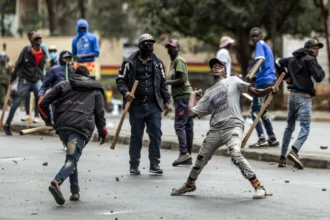

Recent VIDEO footage circulating online has sparked outrage and renewed concern after showing a group of South Africans attacking Black foreign nationals, many of them fellow Africans, while telling them to “go back” to their home countries and fix their own problems. The scenes, described by many viewers as deeply disturbing, have once again placed the issue of xenophobia in South Africa under a harsh spotlight.
In the videos, which have been widely shared across social media platforms, individuals can be seen confronting, harassing, and in some cases physically assaulting foreign nationals. The attackers accuse them of taking jobs, straining public resources, and contributing to crime. What makes the footage particularly troubling is the clear targeting of other Africans, highlighting a complex and painful dynamic where hostility is directed at people who share similar racial and historical backgrounds.
South Africa has long struggled with intermittent outbreaks of xenophobic violence. Over the years, there have been several waves of attacks against foreign nationals, especially those from countries such as Zimbabwe, Nigeria, Mozambique, and Somalia. These incidents often stem from deep-rooted frustrations linked to unemployment, poverty, and inequality—issues that continue to affect large segments of the population.

Experts note that economic hardship can sometimes fuel resentment, with foreign nationals being scapegoated for broader systemic challenges. In many communities, there is a perception that migrants are competing unfairly for limited jobs or running businesses that undercut local traders. While these concerns are often more complex than they appear, they can quickly escalate into anger and violence when left unaddressed.
However, human rights advocates have strongly condemned the attacks, emphasizing that violence and discrimination cannot be justified under any circumstances. They argue that blaming foreign nationals for structural problems diverts attention from the need for effective governance, economic reform, and inclusive policies that benefit everyone living in the country.
The recent footage has also drawn reactions from across the African continent, with many expressing disappointment and sadness. For decades, South Africa has been seen as a symbol of resilience and unity, especially following its transition from apartheid. The targeting of fellow Africans now raises difficult questions about solidarity and shared identity within the region.
Community leaders and activists are calling for urgent action to address the root causes of xenophobia. They stress the importance of promoting dialogue, education, and social cohesion, as well as ensuring that law enforcement responds swiftly to acts of violence. There are also calls for stronger protections for migrants and refugees, many of whom contribute significantly to local economies and communities.
At the same time, some voices within South Africa are urging a more nuanced conversation. They argue that while xenophobia must be condemned, it is also necessary to acknowledge the genuine frustrations felt by many citizens who are struggling to make ends meet. Addressing these grievances in a constructive way, they say, is key to preventing further conflict.
The circulation of these videos serves as a stark reminder of how quickly tensions can escalate and how important it is to foster understanding rather than division. As discussions continue, many hope that this moment will lead to meaningful change—both in tackling xenophobia and in addressing the broader social and economic challenges that contribute to it.
Ultimately, the situation underscores a difficult but crucial truth: lasting peace and stability require not only condemning acts of hatred, but also building a society where all people, regardless of their origin, feel safe, valued, and included.