
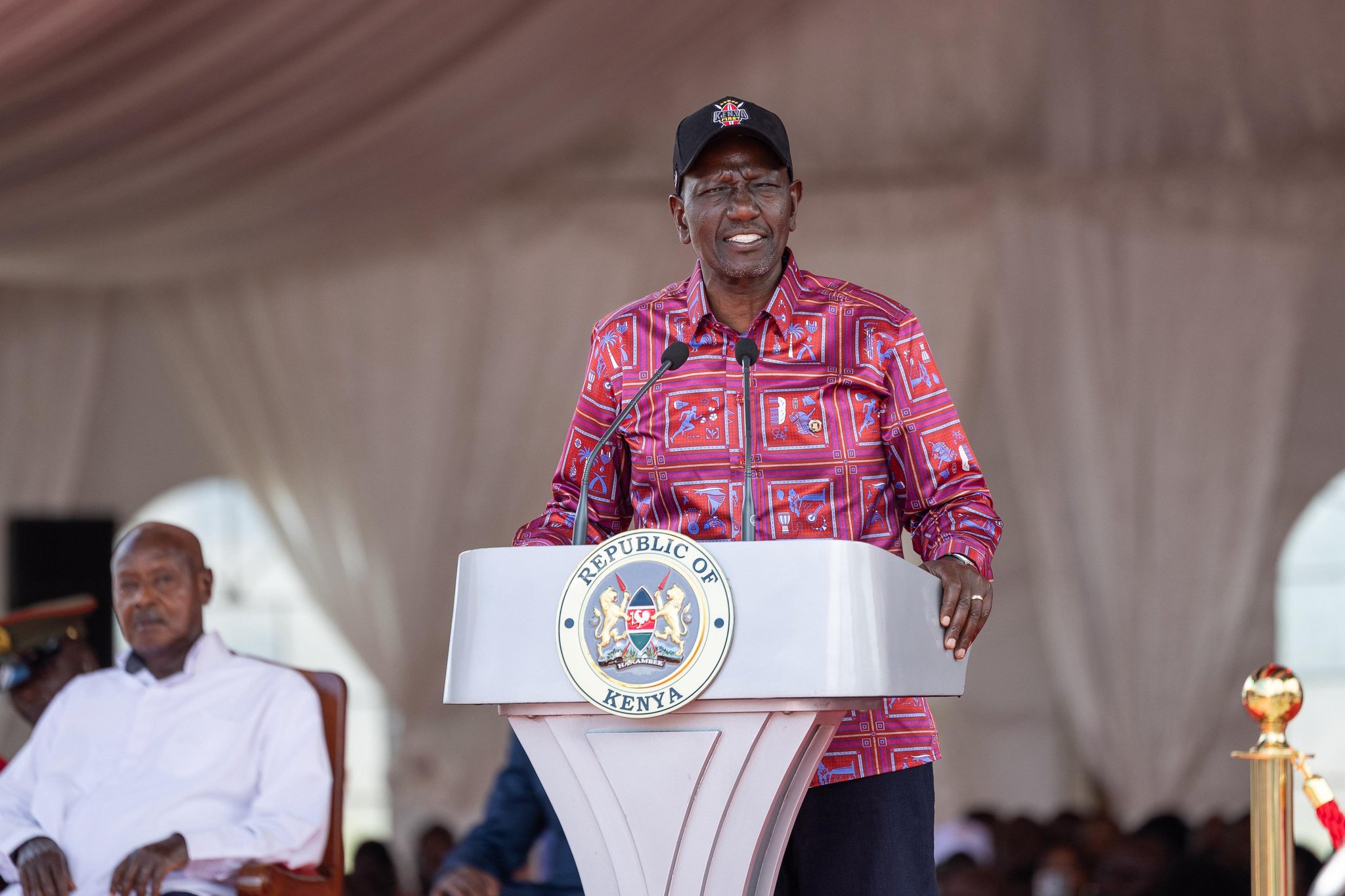
President William Ruto has stirred fresh political debate after telling the opposition, “Tuko kadi kama ni hio mnataka,” signaling a bold shift in rhetoric around a phrase that originally emerged from youth-led political activism.
The phrase “Tuko Kadi” had gained traction in recent months as part of a broader youth-driven campaign aimed at mobilizing and uniting young Kenyans against the current government. The slogan was widely used across social media platforms and political spaces to express frustration over economic hardships, governance concerns, and rising cost of living.
However, in a strategic twist, President William Ruto appears to have co-opted the phrase, reframing it within his own political messaging. By directly addressing the opposition using their own slogan, the Head of State signaled a willingness to confront critics head-on while also attempting to neutralize a message that had been gaining momentum among disenchanted youth.
Political analysts say this move reflects a broader pattern in Kenyan politics, where popular grassroots messaging is often absorbed and repurposed by those in power to reshape narratives and maintain influence.
The remarks come at a time when political temperatures remain high across the country, with public discourse increasingly shaped by online activism and youth-led campaigns. The “Tuko Kadi” movement had initially been seen as a digital rallying call, particularly resonating with urban youth in regions such as Kisumu, Vihiga, and
President Ruto tells the opposition “Tuko Kadi kama ni hio mnataka”
Wilson Airport The Holy Spirit Rutos Scorecard Vihiga Kisumu pic.twitter.com/dimrfa1LhI— SHABZ (@DerrickShabz) March 21, 2026
underline inline cursor-pointer align-baseline”>Nairobi
, where dissatisfaction with government policies has been vocal.
The President’s remarks were made in the context of ongoing political engagements and public appearances, including discussions around development scorecards and national performance tracking. Observers note that by adopting opposition language, the administration may be attempting to reposition itself as responsive and in tune with public sentiment, even as criticism persists.
The evolving use of “Tuko Kadi” highlights the growing influence of youth in shaping Kenya’s political narrative. What began as a protest slogan has now entered mainstream political discourse, underscoring the power of digital mobilization in modern governance debates.
As both government and opposition continue to compete for public support, the battle over messaging—particularly among younger voters—is likely to remain a defining feature of Kenya’s political landscape in the months ahead.