
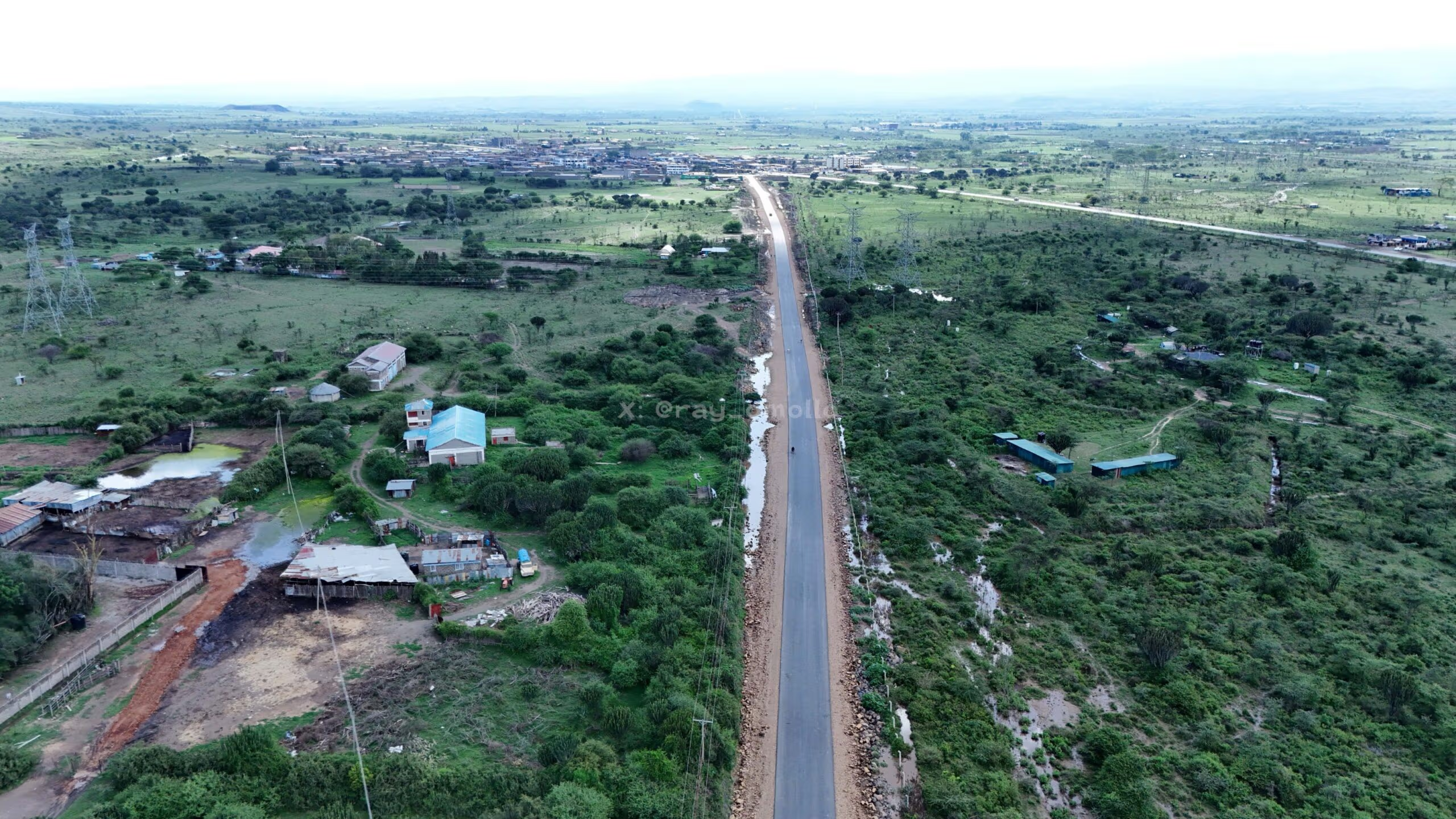
Fresh concerns have emerged over the condition of the Ngong–Suswa road, a major infrastructure project that was officially opened in December 2025, after early signs of deterioration were detected just months into its use. The 70-kilometre highway, constructed at a cost of approximately Sh4 billion, was expected to significantly improve connectivity and unlock economic opportunities in the region. However, recent findings now cast doubt on the durability and quality of the project.
An on-the-ground inspection conducted on April 11 revealed troubling signs along several sections of the road. Observations included visible cracks forming on the asphalt surface, sections that had already undergone patchwork repairs, and areas where the road appeared to have a thin asphalt layer. These issues, appearing so soon after completion, have raised serious questions about whether the road was built to the required standards.
Additional concerns were noted regarding road safety. Some sections of the highway reportedly lack essential features such as guardrails, particularly in areas with steep drops. Sharp bends along the route also appear to have inadequate or missing warning signage, increasing the risk for motorists unfamiliar with the terrain. These gaps in safety infrastructure have heightened fears of potential accidents, especially during nighttime travel or adverse weather conditions.
Motorists who frequently use the road have echoed these concerns, sharing firsthand experiences of uneven surfaces and early signs of wear. Some drivers have reported the formation of potholes and rapid degradation under traffic pressure, particularly in sections exposed to heavy vehicles. The term “carpet road,” often used to describe roads with a thin and short-lived asphalt layer, has been used by some road users to describe the current state of the highway.
The situation has sparked widespread public debate, particularly around the issue of value for money. With a project of this scale costing billions of shillings, expectations were high for a durable and long-lasting road.
Critics argue that such early deterioration suggests possible shortcomings in materials, workmanship, or supervision during construction. While some online discussions have pointed to potential corruption or inflated costs, such claims remain unverified.
In response to the growing concerns, the Kenya Rural Roads Authority has acknowledged the damage but attributed it largely to overloading by heavy trucks. According to the authority, some sections of the road were not designed to handle the weight and frequency of heavy commercial vehicles currently using the route.
KeRRA has indicated that repair works have already commenced in the affected areas, with engineers monitoring the situation and implementing corrective measures. However, the authority has not provided a detailed timeline for the completion of these repairs, nor has it directly addressed questions regarding the original construction standards.
Beyond the immediate issues, the condition of the Ngong–Suswa road has brought attention to broader concerns about infrastructure development in Kenya. While major projects are often celebrated upon completion, their long-term performance is what ultimately determines their success. Early deterioration not only undermines public confidence but also raises concerns about oversight, procurement processes, and quality assurance mechanisms.
The road was intended to ease congestion, improve transport efficiency, and stimulate economic activity in the region. While it has achieved some of these objectives, its current condition threatens to overshadow its benefits. If the deterioration continues or repairs prove unsustainable, the long-term value of the investment could be significantly compromised.
Safety remains a critical concern. The absence of adequate signage, guardrails, and proper road markings increases the risk for road users. Experts warn that such deficiencies, combined with structural weaknesses, could lead to serious accidents if not urgently addressed.
As repair works continue, attention is now shifting to accountability. Questions are being raised about whether contractors will be held responsible for the early defects and whether independent audits will be conducted to assess the quality of the work.
For many Kenyans, this case represents more than just a single road—it is a reflection of how public infrastructure projects are managed and delivered.
Ultimately, the Ngong–Suswa road stands as both a significant investment and a growing concern. While it has the potential to transform regional connectivity, its e””arly deterioration serves as a reminder that infrastructure development must go beyond completion and focus on durability, safety, and long-term value.
As pressure mounts from the public and stakeholders, the coming months will be crucial in determining whether the road can be restored to standard and whether lessons will be learned to prevent similar issues in future projects.