
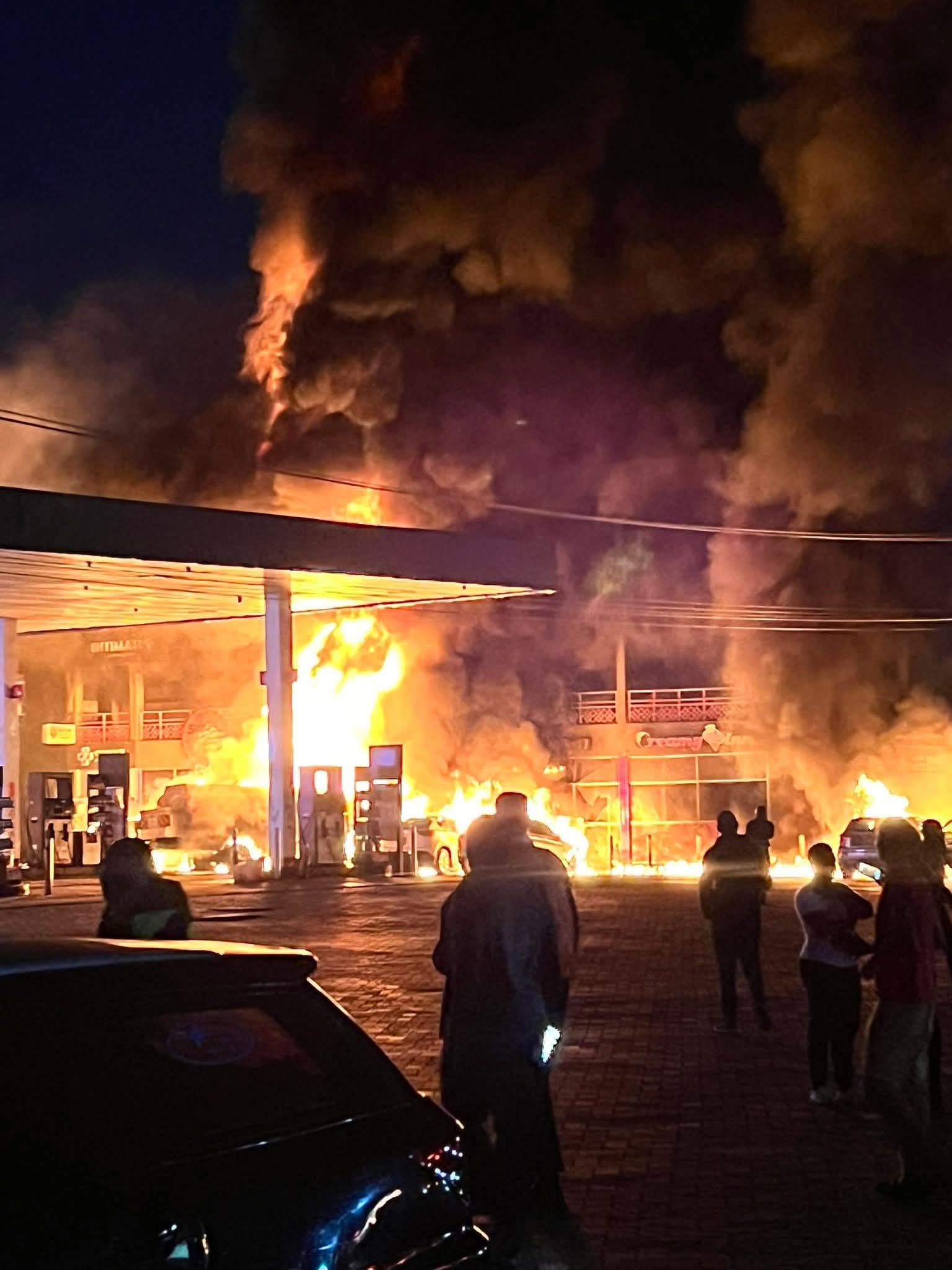
A major fire broke out on Tuesday evening at the Total Fourways petrol station in Nairobi, sending panic through the busy commercial area and prompting an urgent emergency response. The incident, which occurred at around 6:30 p.m., quickly escalated as flames engulfed parts of the station, drawing the attention of motorists, nearby businesses, and residents.
The station, located along a busy junction on the Nairobi–Kiambu route and near popular outlets such as Chicken Inn, is known for heavy traffic, especially during evening hours. The timing of the fire—during peak movement—heightened concerns over safety, congestion, and the potential for further damage.
According to Kenya Red Cross, emergency response teams were dispatched promptly and were already on site by around 7:00 p.m. Firefighters and rescue personnel began efforts to contain the blaze and prevent it from spreading to nearby structures or vehicles.
Authorities urged motorists to avoid the area to allow emergency vehicles unobstructed access. The Nairobi–Kiambu road is a critical transport corridor, and the incident caused immediate traffic disruption, with congestion building up as drivers were redirected or slowed down by the unfolding situation.
Eyewitness accounts and circulating videos on social media showed intense flames rising from the station, with thick smoke visible from a distance. Some onlookers suggested that the fire may have been triggered by a fuel tank explosion, although this has not been officially confirmed. Investigators are expected to assess the scene once the fire is fully contained to determine the exact cause.
As of now, there have been no confirmed reports of injuries or fatalities, though authorities have not yet issued a comprehensive statement. Emergency responders continued to monitor the situation closely, prioritizing safety and ensuring that any potential risks—such as further explosions—were minimized.
The incident has once again highlighted the inherent risks associated with petrol stations, particularly those located in high-traffic urban areas. Fuel stations handle highly flammable materials, and even minor incidents can escalate rapidly if not controlled.
Experts note that strict safety protocols, including proper storage of fuel, regular equipment maintenance, and staff preparedness, are critical in preventing such disasters. In densely populated areas like Nairobi, the stakes are even higher, as fires can quickly spread to nearby buildings and public spaces.
The presence of businesses and eateries near the station also raises concerns about evacuation preparedness and emergency awareness among workers and customers. Incidents like this often serve as a reminder of the importance of clear safety guidelines and rapid response systems.
For residents and motorists, the immediate concern remains safety and access. Authorities have emphasized the need for cooperation, urging the public to stay away from the area until the situation is fully under control.
As investigations begin, attention will likely focus on whether safety standards were adhered to and what measures can be implemented to prevent similar incidents in the future. The outcome of these findings could influence policy discussions around the placement and regulation of fuel stations in urban centers.
The fire at Total Fourways stands as a stark reminder of how quickly emergencies can unfold in everyday spaces—and the critical role of coordinated response efforts in preventing potential tragedy.