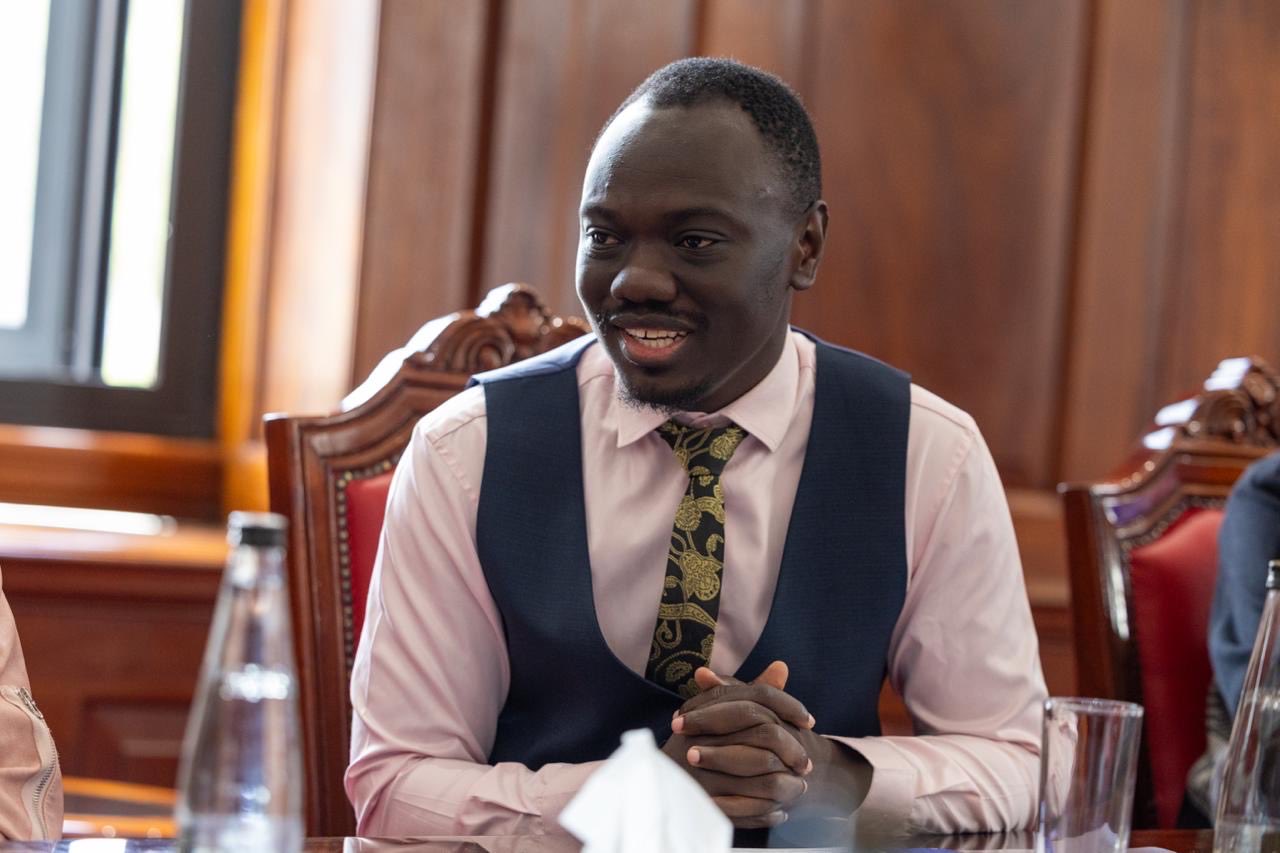
A heated public exchange between Eddie Butita and Octopizzo has ignited a broader conversation about ownership, exploitation, and systemic failures within Kenya’s music industry.
The debate was triggered after Butita revealed details from a recent meeting that he described as “very sad,” where it emerged that more than 30 Kenyan artists do not own their music, their names, or even the rights to their own images.
He emphasised that many of these agreements are permanent, meaning the artists have no legal pathway to reclaim control over their work, despite the commercial success of their songs.
Butita’s remarks painted a grim picture of an industry where creatives, despite producing hit records and building recognisable brands, remain locked out of the financial and intellectual benefits of their own content.
The revelation quickly gained traction online, sparking concern among fans and industry stakeholders who have long suspected deep-rooted issues in artist contracts and rights management.
However, Octopizzo pushed back strongly, arguing that the conversation should not be reduced to personalities or proximity to power but must instead focus on policy, law, and structural reform.
Acha kutupima @eddiebutita This matter cannot be reduced to personalities or proximity to power it is, at its core, a question of policy, law, and institutional reform.
For over a decade, kwanza kwanzia 2010 stakeholders in the music industry (artists, producers ) have…
— OCTOPIZZO (@OCTOPIZZO) April 3, 2026
He pointed out that concerns around copyright protection, enforcement, and fair remuneration are not new, noting that artists and producers have been raising these issues consistently since as far back as 2010.
According to Octopizzo, repeated engagements with institutions such as the Music Copyright Society of Kenya (MCSK) have failed to yield meaningful results, leaving artists frustrated and financially disadvantaged.
He referenced past efforts, including direct confrontations with leadership in copyright bodies, arguing that despite years of advocacy, little has changed in terms of transparency or equitable revenue distribution.
Octopizzo further stressed that the issue is inherently political, contradicting earlier suggestions that it should be treated as a non-political matter.
He argued that without political will and legislative intervention, meaningful reform in the music industry will remain elusive.
At the core of his response was a critique of what he sees as misplaced advocacy, cautioning that intellectual property is a highly technical field that requires expertise in legal, commercial, and creative frameworks.
He challenged Butita’s position directly, stating that effective advocacy must be grounded in deep understanding rather than visibility or access to influential networks.
The rapper also highlighted the legal complexity surrounding international contracts, explaining that once artists assign rights through binding agreements, reversing those decisions is not as simple as public pressure or social media campaigns.
Instead, he argued that the focus should shift toward ensuring artists receive proper legal guidance before signing contracts, thereby preventing exploitation at the negotiation stage.
Domestically, Octopizzo called for urgent reforms within collective management organizations, particularly the Music Copyright Society of Kenya and the Kenya Association of Music Producers.
He accused these institutions of failing to uphold their mandate of protecting artists’ rights, citing long-standing concerns about governance, accountability, and revenue distribution.
According to him, the lack of transparency within these bodies has eroded trust among artists, many of whom feel excluded from systems meant to safeguard their earnings.
He further criticized what he described as selective activism, questioning why certain voices have not consistently addressed issues within these organizations despite their central role in the crisis.
Beyond institutional failures, Octopizzo also turned the spotlight inward, calling on artists and producers to reflect on industry practices that may be contributing to the problem.
Earlier this week, I was in a meeting that was honestly very sad. Over 30 artists do not own their music yes most of the hits you know, their names, or even the rights to their images and this is in perpetuity. This has had serious consequences: many music groups have stopped… pic.twitter.com/XCsfd3hl6u
— Eddie Butita OGW (@eddiebutita) April 3, 2026
He noted the growing trend of using downloaded or derivative beats, arguing that such practices complicate copyright enforcement and weaken claims of originality.
This, he explained, creates additional challenges for intellectual property systems that are designed to protect unique creative works.
The exchange between the two figures has since evolved into a wider national conversation, highlighting long-standing structural weaknesses in Kenya’s creative economy.
For many observers, the clash underscores a deeper crisis where talent, creativity, and commercial success do not always translate into ownership or financial security for artists.
It also raises critical questions about the role of policy, regulation, and education in shaping a more equitable industry.
As the debate continues, one point remains clear: the issue of artist rights in Kenya is far from resolved, and without deliberate reforms, the cycle of exploitation is likely to persist.