
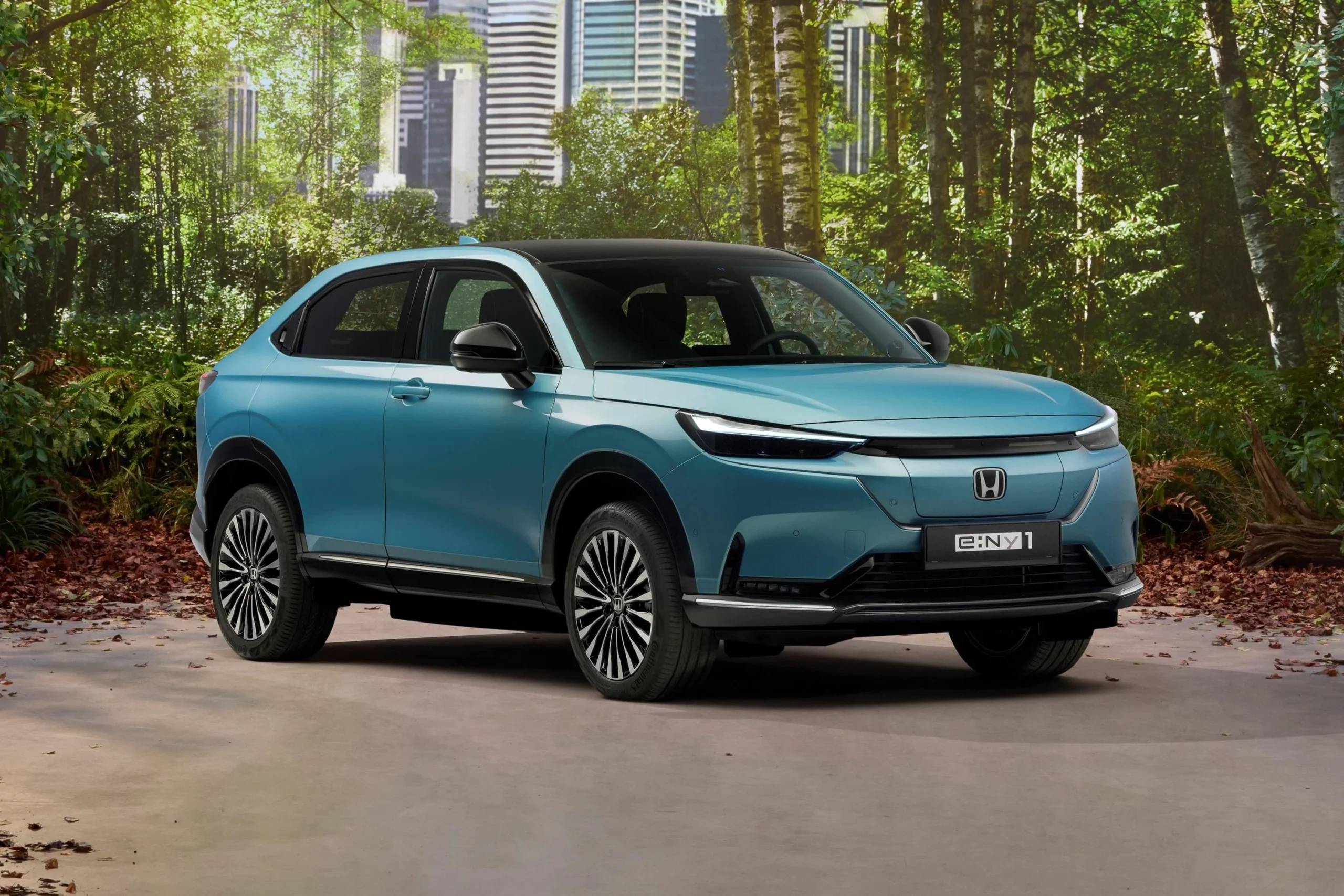
Honda has made a bold move in the electric vehicle market, cutting the price of its all-electric SUV, the Honda Prologue, by a massive $7,500—instantly turning it into one of the most competitive EV deals in the United States.
The price cut applies across all trims of the 2026 model, effectively replacing the now-defunct federal EV tax credit that had previously helped buyers offset costs.
With this adjustment, the base Prologue EX now starts at around $39,900, bringing it firmly into the sub-$40,000 EV category—a critical pricing threshold that significantly broadens its appeal to mainstream buyers.
Just a year ago, the same model would have cost roughly $47,000, meaning buyers are now getting the same electric SUV for substantially less money without sacrificing features or performance.
Honda’s decision comes at a time when EV demand has softened, largely due to the removal of government incentives, which had previously made electric cars more affordable.
By matching the exact value of the old tax credit, Honda is essentially absorbing the cost itself—an aggressive strategy aimed at keeping the Prologue competitive in an increasingly crowded EV market.
The timing of the move is critical, as the broader EV sector has seen declining sales in early 2026, with some models experiencing steep drops in demand following policy changes.
Despite these challenges, the Prologue remains a strong contender in its class, offering up to 308 miles of range on a single charge for front-wheel-drive models and around 294 miles for all-wheel-drive variants.
Under the hood, the SUV is powered by an 85-kWh battery pack and delivers up to 300 horsepower in dual-motor configurations, making it both practical and performance-capable.
The Prologue is also built on General Motors’ Ultium platform, the same architecture used in models like the Chevrolet Blazer EV and Cadillac Lyriq, giving it a solid technological foundation.
In terms of features, even the base model comes well-equipped, including a large 11.3-inch infotainment screen, digital instrument cluster, wireless smartphone connectivity, advanced driver-assistance systems, and dual-zone climate control.
Higher trims, such as the Touring and Elite, add premium touches like leather interiors, Bose audio systems, panoramic roofs, and enhanced safety tech, pushing the Prologue into near-luxury territory while still undercutting many rivals on price.
The new pricing also puts the Prologue head-to-head with major competitors like the Tesla Model Y, Hyundai Ioniq 5, and Ford Mustang Mach-E, all of which hover around the same price range but often lack the same balance of size, range, and features.
Industry analysts say this move is less about making the Prologue the cheapest EV on the market and more about making it a “fair deal”—one that delivers strong value without relying on government subsidies.
It also signals a shift in strategy for Honda, which has recently scaled back some of its future EV plans while doubling down on hybrids and maintaining a more cautious approach to full electrification.
For consumers, however, the result is simple: a well-equipped, long-range electric SUV at a price point that suddenly feels far more accessible.
In a market where affordability remains one of the biggest barriers to EV adoption, Honda’s aggressive pricing could make the Prologue one of the smartest buys available right now.