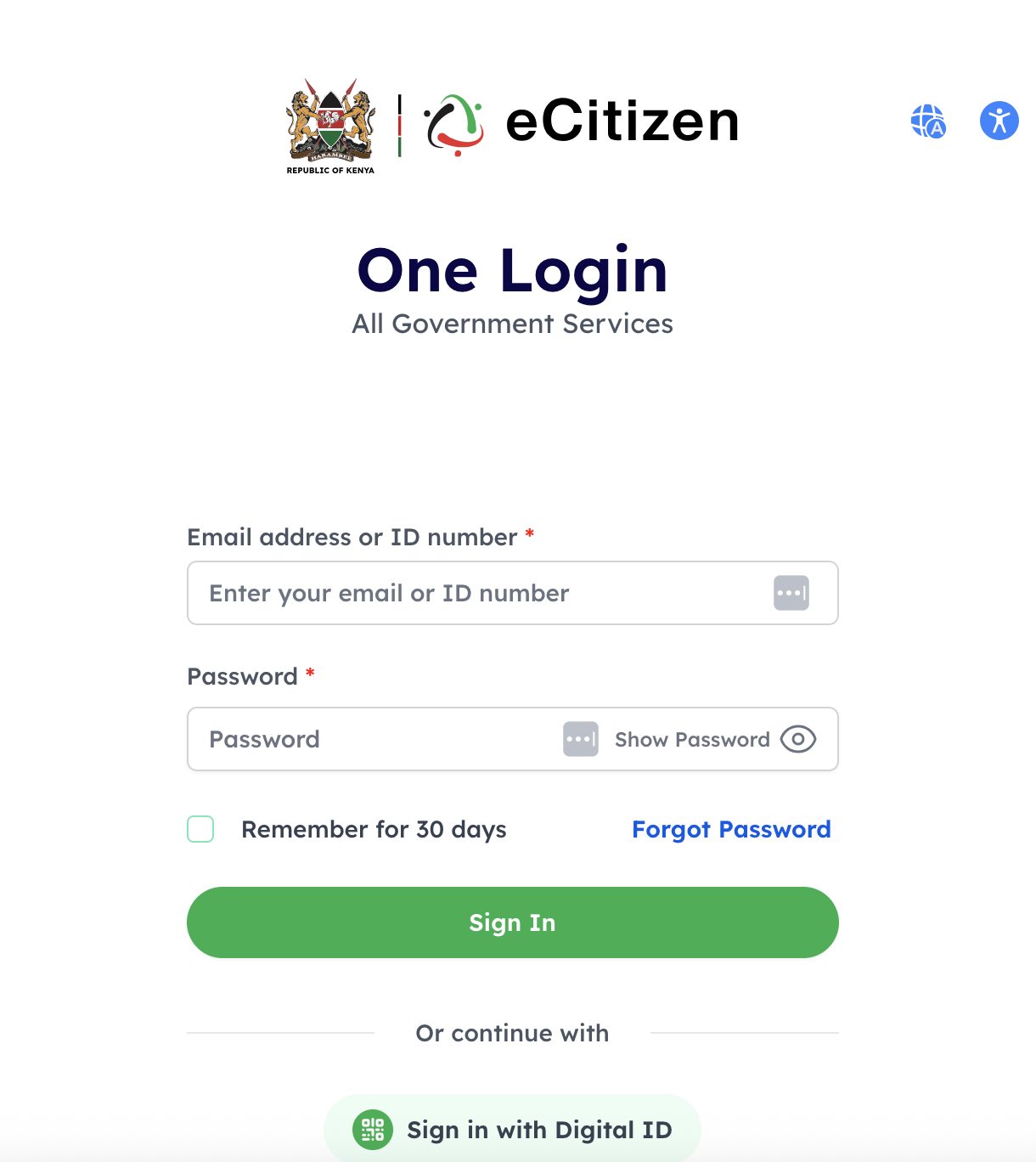
Kenya’s digital government services portal, eCitizen, is set to introduce advertisements alongside official government announcements as part of its latest platform upgrade, marking a notable shift in how information is presented on the widely used public service portal.
The move comes as the platform continues to expand its services and infrastructure to accommodate millions of Kenyans who rely on it for essential government services, including passport applications, business registration, and access to public records.
Launched by the Government of Kenya, the eCitizen portal has become the country’s central hub for accessing digital government services. Through the platform, citizens can interact with multiple state agencies without physically visiting government offices.
Services available through eCitizen include applications from institutions such as the Directorate of Immigration Services, the National Transport and Safety Authority, and the Registrar of Companies.
Officials say the platform processes millions of transactions annually, making it one of the most widely used government digital systems in East Africa.
Introduction of Advertisements
Under the new upgrade, advertisements are expected to appear alongside official government announcements and notifications displayed to users while navigating the portal.
Although details about the type of advertising partners and the structure of the ad placements have not yet been fully disclosed, the initiative is believed to be part of efforts to generate additional revenue and support the platform’s operational costs.
Government digital infrastructure requires significant investment in cybersecurity, cloud hosting, maintenance, and system upgrades, and some analysts say introducing advertising could help offset these expenses.
Balancing Public Information and Commercial Content
The introduction of ads on a government service platform has sparked discussion among technology observers and digital governance experts.
Supporters argue that if implemented transparently and responsibly, advertising could provide a non-tax revenue stream to support digital services.
However, critics have raised questions about:
-
The appropriateness of commercial advertising on a government portal
-
How ads will be regulated and vetted
-
Whether the move could distract from official information
Maintaining a clear distinction between government communication and sponsored content will likely be critical to preserving public trust in the platform.
Part of a Broader Digital Transformation
The update comes as Kenya continues to accelerate its digital transformation agenda, with government services increasingly shifting online.
Officials have repeatedly emphasised the importance of expanding digital platforms to improve efficiency, transparency, and service delivery.
Platforms like eCitizen are central to these reforms, allowing citizens to access services such as passport tracking, driving licence renewals, land searches, and business registrations from anywhere in the country.
Looking Ahead
As the new upgrade rolls out, the effectiveness and public reception of advertisements on eCitizen will likely be closely watched.
For many Kenyans, the platform represents the primary gateway to government services, meaning any changes to its design or functionality can have a widespread impact.
If managed carefully, the introduction of advertising could become a new model for funding public digital infrastructure. But maintaining clarity, transparency, and user trust will remain essential as the platform evolves.