A chilling security breach has rocked Kenya’s military circles after two Kenya Defence Forces (KDF) soldiers and three civilians were charged in connection with an alleged plot targeting a senior military officer in Kitengela, Kajiado County.
The suspects are accused of conspiring to break into the private residence of George Okumu Opondo over a period between March 18 and March 25, 2026, in what investigators now believe may have been part of a larger and more sinister plan.
According to court proceedings at the Milimani Law Courts, the group was found in possession of a range of tools commonly associated with forced entry, including crowbars, hammers, pliers, and a knife.
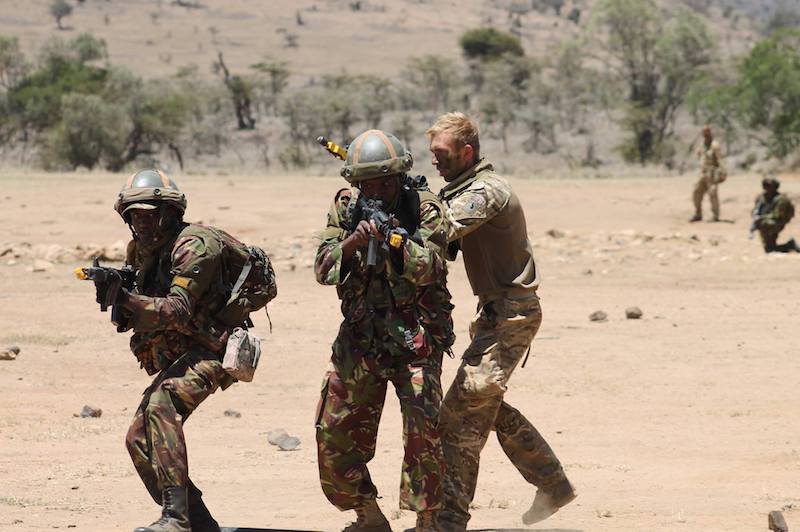
More significantly, authorities also recovered KDF jungle attire, raising concerns about the potential misuse of official military gear in criminal operations.
The presence of military uniforms in the operation has heightened fears that the suspects may have intended to exploit their identities or impersonate authorized personnel to gain access to the target.
One of the key suspects, Sergeant Charles Kiio Matata, was immediately taken into custody by military police following his arraignment.
He is now set to face a court martial on separate allegations of desertion, indicating that his case may proceed within the military justice system rather than the civilian courts.
His co-accused, including a civilian mechanic employed by the KDF, were granted bond terms of Ksh 1 million each, with an alternative cash bail option of Ksh 500,000.
The court’s decision to release the civilian suspects on bond reflects the ongoing nature of investigations, even as the gravity of the allegations continues to unfold.
Investigators presented startling claims before the court, alleging that the group was not acting alone but may have been working in coordination with other military officers.
According to the prosecution, intelligence reports had pointed to a planned attack, prompting law enforcement agencies to lay an ambush near Major General Opondo’s residence.
This preemptive move is believed to have disrupted the alleged plot before it could be executed, potentially preventing a high-profile security incident.
The suggestion that active or former military personnel could be involved in such a plot has raised serious questions about internal discipline, intelligence leaks, and the integrity of security structures.
Adding to the mystery, another KDF officer who had initially been arrested alongside the suspects was not presented in court, with no clear explanation provided for their absence.
This development has fueled speculation about the scope of the investigation and whether additional suspects may be under separate handling within military channels.
The court has scheduled the case for hearing on April 29, 2026, setting the stage for what is expected to be a closely watched legal battle.
Meanwhile, key exhibits—including seized vehicles, mobile phones, and military attire—have been retained by investigators as evidence.
These items are likely to play a crucial role in establishing the extent of planning, communication, and coordination among the suspects.
The case has sent shockwaves through both security and civilian circles, highlighting the potential risks posed when individuals with specialized training and access to sensitive resources are implicated in criminal activities.
It also underscores the importance of intelligence-led policing, which in this instance appears to have played a decisive role in averting a potentially deadly outcome.
As investigations continue, attention will remain focused on uncovering the full network behind the alleged plot and determining whether deeper institutional issues may have enabled such a breach.
For now, the incident stands as a stark reminder that threats to national security can sometimes emerge from within—and that vigilance remains critical at every level.