
In a historic milestone for space exploration, astronauts aboard Artemis II have officially set a new record for the farthest distance traveled from Earth by humans, surpassing a benchmark that had stood since the Apollo era. The achievement marks a powerful return to deep space exploration and signals a new chapter in humanity’s journey back to the Moon.
On April 6, the four-member crew—Reid Wiseman, Victor Glover, Christina Koch, and Jeremy Hansen—reached an astonishing distance of 252,756 miles (406,000 kilometers) from Earth aboard the Orion spacecraft. This surpasses the previous record set during Apollo 13 in 1970, which had long remained the furthest humans had ever traveled into space.
This milestone is particularly significant because it represents the first time humans have traveled beyond low-Earth orbit since Apollo 17, the final crewed mission of the Apollo program more than five decades ago.
The Artemis II mission is not just about breaking records—it is a critical test flight designed to validate the systems that will support future lunar landings. The Orion spacecraft, developed by NASA, is being pushed to its limits to ensure it can safely carry astronauts on longer and more complex missions, including the planned return to the lunar surface.
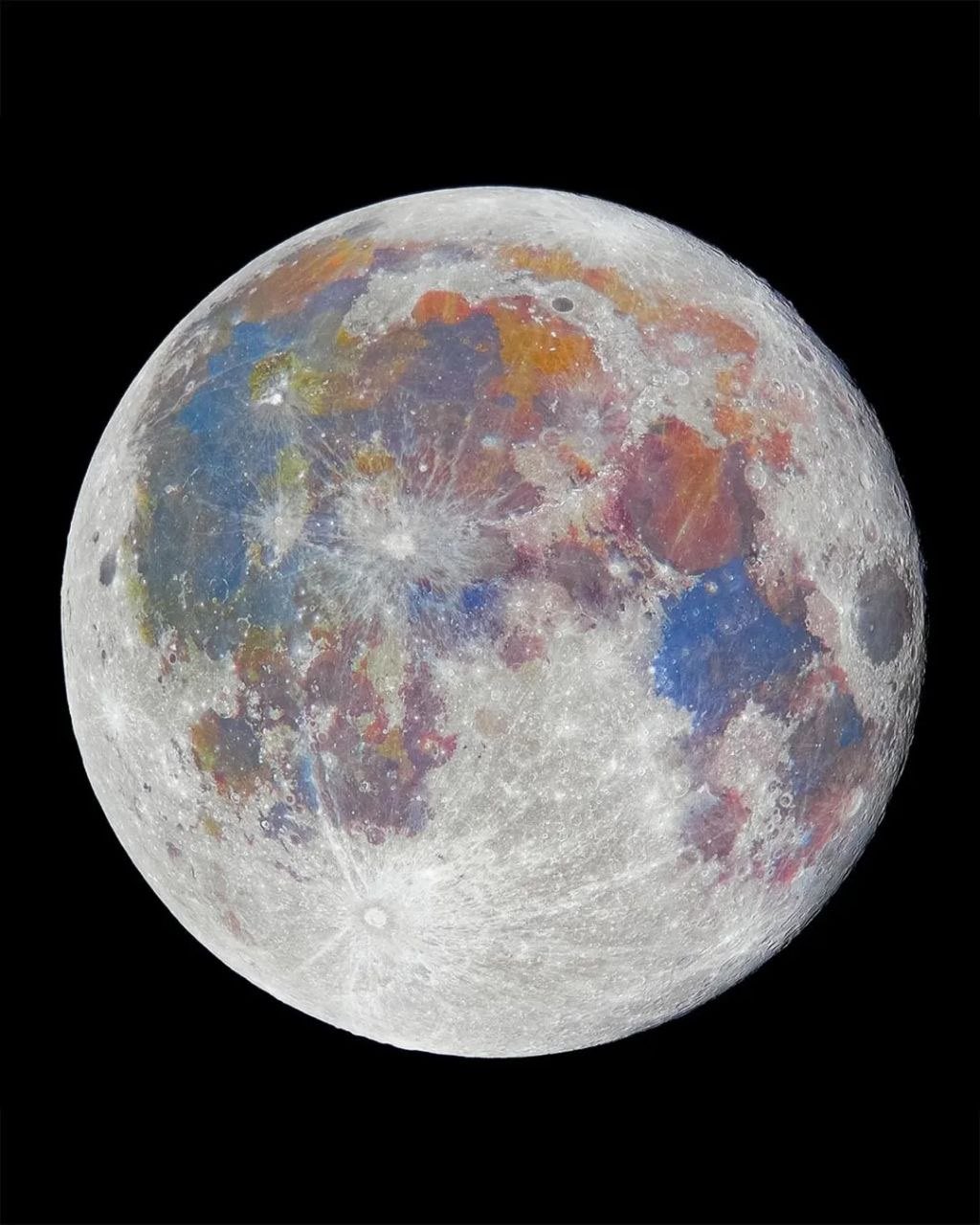
During their journey, the crew captured stunning high-resolution images of both the near and far sides of the Moon, offering new visual insights into Earth’s closest celestial neighbor. These images revealed subtle color variations—hints of blues and oranges—that are rarely visible from Earth, providing scientists with additional data about the Moon’s composition and surface features.
In a moment that blended science with humanity, the astronauts also proposed naming certain lunar craters. One was suggested to be called “Integrity,” in honor of their spacecraft, while another was proposed as “Carroll,” a tribute to Reid Wiseman’s late wife. These gestures reflect the deeply personal dimension of space exploration, where milestones are not just technical achievements but also human stories carried across vast distances.
Adding to the emotional significance of the mission, the crew received a special wake-up message from Jim Lovell, one of the pioneers of lunar exploration. Lovell’s message served as a symbolic bridge between generations of astronauts, connecting the legacy of the Apollo missions with the future of Artemis.
The mission also offered rare observational opportunities. At one point, the crew experienced a solar eclipse from space, witnessing the Sun disappear behind the Moon as the Orion spacecraft aligned with both celestial bodies. This phenomenon, seen from deep space, provided a unique perspective that few humans have ever experienced.
Beyond the scientific and technical achievements, the Artemis II mission carries significant geopolitical and strategic importance. The renewed push toward lunar exploration is part of a broader effort to establish a sustained human presence on the Moon, paving the way for future missions to Mars and beyond.
NASA Artemis passing close to the Moon pic.twitter.com/jLvGoW1IR9
— Elon Musk (@elonmusk) April 7, 2026
The success of Artemis II is expected to directly influence the next phase of the program—Artemis III—which aims to land astronauts on the Moon for the first time in the 21st century. Lessons learned from this mission will shape everything from spacecraft design to crew safety protocols.
The achievement has also captured global attention, with leaders and space enthusiasts celebrating the milestone. It represents not only a technical victory but also a renewed sense of ambition in human space exploration.
As the mission now heads toward its final phase—a planned splashdown in the Pacific Ocean—the focus will shift to analyzing data collected during the journey. Engineers and scientists will examine every aspect of the mission to refine future operations and ensure even greater success in upcoming missions.
The Artemis II record-breaking journey is more than just a number—it is a symbol of how far humanity has come, and how much further it intends to go. After more than 50 years, humans have once again ventured deeper into space than ever before, reigniting a spirit of exploration that continues to define our place in the universe.
With Artemis II setting new benchmarks and proving critical systems, the path toward returning humans to the Moon—and eventually reaching Mars—has never been clearer.