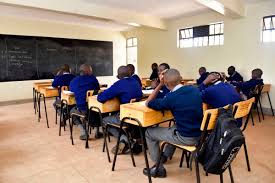
A growing wave of frustration is emerging among Kenyan parents, teachers, and citizens over what many now describe as an overloaded and exhausting education system.
Sparked by viral conversations on X (formerly Twitter), the debate is putting a spotlight on the realities of school life for children—especially in boarding and private schools—where long hours, excessive homework, and weekend classes have become the norm.
At the heart of the discussion is a simple but powerful question: Are Kenyan children being pushed too far in the name of academic success?
The conversation began with a striking observation—that some students wake up as early as 3 a.m. after sleeping late, all in pursuit of better grades. For many, this routine is not an exception but a daily reality, particularly in boarding schools where strict schedules dominate student life.
Across social media, users painted a picture of an education system that feels less like a place of learning and more like a system of endurance. Terms like “prison,” “Alcatraz,” and “torture” were used to describe schools—an indication of just how deeply the issue resonates with the public.
Many parents expressed concern that children are no longer given space to simply be children. Instead, their days are tightly packed with classes, assignments, tuition sessions, and constant academic pressure.
One of the most common complaints revolves around homework overload.
Parents argue that children already spend the entire day in school—often from as early as 6:30 a.m. to late afternoon—only to return home to hours of homework. For younger children, some as young as four years old, this has raised serious questions about whether the system is developmentally appropriate.
Critics say homework has shifted from being a reinforcement tool to a form of punishment. Instead of helping children learn, it is increasingly seen as contributing to stress, fatigue, and even resentment toward school.
The issue becomes even more pronounced when combined with Saturday classes and extra tuition sessions.
In some cases, students are required to attend school six or even seven days a week, with strict penalties for absence. Reports of students being punished for missing Saturday classes have sparked outrage, with many questioning whether such practices should be banned altogether.
For many families, weekends—once a time for rest, hobbies, and bonding—have been absorbed into the academic calendar.
Ban weekday homework. Kids wake up at 5am, spend the whole day in school, get home at 5pm, then are loaded with more assignments. That is not education but burnout.
Let homework be for weekends only, or parents want schools to justify school fees?
— Cyprian, Is Nyakundi (@C_NyaKundiH) April 9, 2026
This has led to growing concern about student burnout.
Burnout, a concept often associated with working adults, is now being widely used to describe the experiences of schoolchildren. Long hours, constant pressure, and lack of rest are taking a toll not just on academic performance, but also on mental health and overall well-being.
Some educators and parents argue that the system has lost sight of its core purpose.
Education, they say, should be about discovery, creativity, and growth—not just grades and exam performance. When learning becomes synonymous with stress, the entire purpose of education is undermined.
Another key issue raised in the debate is the early start times and extended school hours.
Many believe that children do not need to be in school for excessively long periods to learn effectively. Suggestions have emerged proposing shorter school days—such as 9 a.m. to 3 p.m.—with more focused and efficient teaching.
Some argue that “less is more,” emphasizing that quality of learning matters far more than quantity of time spent in class.
The debate also touches on the role of parents and the expectations they place on schools.
Some teachers argue that parents demand “value for money,” especially in private schools, pushing institutions to extend hours, increase workload, and maximize academic output. In this sense, the pressure is not only coming from the system but also from societal expectations around success and competition.
However, not everyone agrees that the system is entirely flawed.
Some parents defend homework, saying it helps them track their children’s progress and understand what they are learning. For these parents, the issue is not homework itself, but the amount and intensity.
This highlights an important divide in the conversation—between those who see homework as necessary and those who believe it has become excessive.
The debate has also raised questions about Kenya’s Competency-Based Curriculum (CBC), which was introduced partly to reduce academic pressure and promote holistic learning.
Many are now asking whether CBC is achieving its intended goals, or whether the same pressures have simply been repackaged in a different format.
Another underlying issue is the structure of the education system itself.
Critics argue that the system prioritizes exam results over actual understanding, pushing schools to adopt aggressive teaching methods to maintain high performance rankings. This has created an environment where success is narrowly defined by grades, often at the expense of creativity, critical thinking, and personal development.
There are also concerns about inequality.
Children from less privileged backgrounds, who may not have access to extra tuition or parental support, are often left struggling to keep up with demanding workloads. At the same time, others are being pushed beyond reasonable limits in highly competitive environments.
The result is a system that is not only stressful but also uneven in its impact.
Beyond academics, many are calling attention to the importance of play, rest, and social development.
Child development experts consistently emphasize that play is essential for growth, creativity, and emotional well-being. Yet, in the current system, time for play is increasingly being squeezed out by academic demands.
Weekends that should be spent exploring hobbies, building friendships, or bonding with family are now dominated by school-related activities.
This shift raises concerns about the long-term effects on children’s mental health and social skills.
The conversation has also sparked calls for policy intervention.
Some are advocating for:
- Regulation of school hours
- Limits on homework, especially for younger children
- Banning or restricting Saturday classes
- Greater oversight of private schools
- Stronger focus on student well-being
These proposals reflect a growing recognition that the education system may need to be rebalanced.
At its core, this debate is not about rejecting education—it is about redefining it.
It is about asking whether the current system truly prepares children for the future, or whether it simply trains them to endure pressure.
It is about questioning whether success should come at the cost of childhood.
And perhaps most importantly, it is about listening—to parents, teachers, and students themselves.
Because behind every statistic, every policy, and every curriculum, there is a child navigating a system that shapes not just their academic future, but their entire life experience.
As the conversation continues, one thing is clear: Kenya’s education system is at a crossroads.
Whether it evolves or remains the same will depend on how seriously these concerns are taken—and whether meaningful changes are made to ensure that learning becomes not a burden, but a journey worth experiencing.