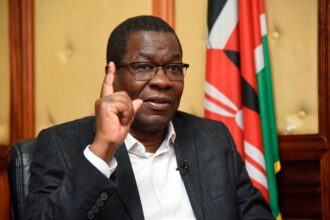

President William Ruto has taken decisive action by firing top energy officials following a major corruption probe in Kenya’s petroleum sector.
The move comes after investigations revealed serious irregularities in the fuel supply chain, leading to arrests and resignations of senior figures.
The crackdown signals a strong stance by the government to restore accountability, transparency, and stability in Kenya’s critical energy industry.
The Kenyan government has unveiled a sweeping crackdown on alleged irregularities within the petroleum supply chain, following a high-level inquiry ordered by the Executive Office of the President that has already triggered resignations and disciplinary action against top officials.
In an official press release under Notification of Presidential Action No. VII of 2026, the government confirmed that the probe centers on manipulation of fuel supply data, irregular procurement of emergency fuel cargo, and possible economic crimes within the sector.
The directive comes amid growing concern that individuals tasked with managing Kenya’s petroleum supply chain may have deliberately falsified data on in-country fuel stocks to create artificial panic and exploit global price volatility.
According to the report, the suspected manipulation created a false impression of an impending fuel shortage, potentially influencing procurement decisions and market behavior to the detriment of the public.
The government noted that these actions directly undermined the Government-to-Government (G2G) fuel supply framework introduced in 2023, which was designed to stabilize supply, cushion the market from global shocks, and reduce pressure on foreign exchange reserves.
Under this arrangement, Kenya has been sourcing fuel from international suppliers including Aramco Trading Fujairah, ADNOC, and Emirates National Oil Company, all of whom have reportedly met their contractual obligations without disruption.
Despite this stable supply environment, the inquiry found that an emergency fuel cargo was procured in blatant violation of the G2G framework, at significantly inflated prices and without adherence to established procurement procedures.
Further findings indicate that the shipment in question was not only overpriced but also of substandard quality, raising serious concerns about both financial mismanagement and potential risks to consumers.
The report describes the actions of those involved as “egregious misrepresentation,” noting that such conduct may constitute violations under the Anti-Corruption and Economic Crimes Act as well as the Penal Code.
As a result of the findings, the government has moved swiftly to take action against key figures at the center of the scandal.
Mohamed Liban has resigned from his position as Principal Secretary in the State Department for Petroleum.
The board of Kenya Pipeline Company (KPC) has accepted the resignation of Managing Director Joe Sang.
Similarly, the Energy and Petroleum Regulatory Authority (EPRA) has received the resignation of its Director General Daniel Kiptoo Bargoria.
In addition to the resignations, administrative and disciplinary proceedings have been initiated against other officials, including Joseph Wafula, Deputy Director of Petroleum, and Joel Mburu, Supply and Logistics Manager at KPC.
The government has also confirmed that investigative agencies have already effected arrests of principal officeholders, signaling a shift from administrative action to potential criminal prosecution.
Authorities emphasized that the inquiry has been escalated to relevant investigative bodies to conduct a full and comprehensive probe, with all stakeholders in the petroleum sector required to provide full access to information.
The presidency underscored that petroleum products remain the backbone of Kenya’s economy, making integrity in the supply chain a matter of national interest and public trust.
Officials warned that any act of economic sabotage will be met with firm and decisive action, reinforcing the administration’s stance on accountability within critical sectors.
The statement also hinted at further measures to ensure full accountability, including the reversal of irregular procurement decisions and realignment with the G2G framework.
This development comes at a time when Kenya has maintained a relatively stable fuel supply and pricing, even amid geopolitical tensions in the Middle East that have disrupted global energy markets.
The government credited the G2G arrangement for ensuring an uninterrupted supply and reducing the fiscal burden previously associated with fuel subsidies.
However, the emergence of internal manipulation within an otherwise stable system has raised serious questions about governance, oversight, and the potential existence of entrenched cartels within the energy sector.
The fallout from the probe is expected to have far-reaching implications, not only for individuals involved but also for policy, regulatory reforms, and public confidence in the management of national resources.
As investigations continue, the government has pledged to keep the public informed while taking decisive steps to safeguard the integrity of Kenya’s petroleum supply chain.