
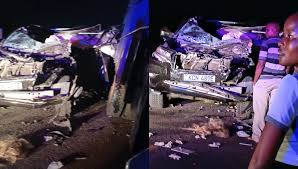
Kenya has been thrown into mourning following confirmed reports that William K. Ruto, the Managing Director of the Kenya Ports Authority (KPA), was involved in a tragic road accident that claimed the life of his daughter.
The fatal crash occurred on Friday evening in Taita Taveta County, where the senior official was travelling with members of his family, turning what was expected to be a routine journey into a devastating incident that has shocked the nation.
According to official communication from KPA, the accident resulted in critical injuries to several occupants, with the most tragic outcome being the death of his daughter, who succumbed to injuries sustained during the crash.
The authority described the loss as deeply painful, extending its condolences to the family while acknowledging the emotional toll the tragedy has taken on both the institution and those close to the affected family.
Captain Ruto, along with other family members who survived the crash, was rushed to hospital and is currently receiving medical care under close supervision, with officials confirming that those injured are in stable condition.
Medical teams are said to be closely monitoring their recovery, even as the family grapples with the emotional weight of the loss.
Authorities have launched investigations into the circumstances surrounding the accident, with traffic police and other relevant agencies working to establish the exact cause of the crash.
Preliminary assessments are expected to examine factors such as road conditions, vehicle status, driver actions, and possible external influences that may have contributed to the incident.
KPA has indicated that it is cooperating fully with investigators and has called for patience as authorities work to piece together what happened in the moments leading up to the crash.
The agency has also appealed to the public and media to respect the privacy of the family during this difficult period, emphasizing the need for dignity and sensitivity as they mourn.
The incident has drawn widespread national attention, not only because of the tragedy itself but also due to the confusion caused by the similarity in names between the KPA boss and William Ruto.
Officials have since clarified that the individual involved is the Managing Director of KPA and not the President, addressing misinformation that quickly spread online in the immediate aftermath of the reports.
Beyond the personal loss, the accident has reignited concerns about road safety in Kenya, particularly along highways and regional routes where fatal crashes have become increasingly common.
Recent data and reports have pointed to a rise in road accidents across the country, often linked to factors such as speeding, driver fatigue, poor road conditions, and inadequate enforcement of traffic regulations.
The tragedy involving a high-profile public official has once again highlighted the reality that road accidents do not discriminate, affecting individuals across all levels of society.
For many Kenyans, the loss of a child under such circumstances has struck a particularly emotional chord, prompting an outpouring of sympathy and solidarity across social media platforms.
Leaders, colleagues, and institutions are expected to continue sending messages of condolence as the family begins the difficult process of mourning and coming to terms with the loss.
The incident also comes at a time when leadership decisions within KPA are under scrutiny, particularly amid reports that William Ruto is considering extending the tenure of the Managing Director beyond the limits outlined in the Mwongozo Code of Governance for State Corporations.
The code, which guides leadership terms in public institutions, is designed to promote accountability and prevent prolonged occupancy of strategic positions, making any proposed extension a subject of public and policy debate.
Critics argue that extending tenure outside established guidelines risks undermining governance frameworks, while supporters view continuity in leadership as critical for sustaining major infrastructure and logistics reforms within the port sector.
This governance backdrop adds another layer of complexity to an already tragic moment, placing the spotlight on both institutional leadership and personal loss simultaneously.
As investigations into the accident continue, authorities are expected to release further details that may provide clarity on what caused the crash and whether any preventive measures could have been taken.
For now, the focus remains on the recovery of those injured, the mourning of a life lost too soon, and the broader reflection on road safety and accountability in Kenya.
The tragedy leaves behind not just unanswered questions, but a grieving family and a nation reminded of how fragile life can be, even for those in positions of power and influence.